Wilhelm Gustloff
 Germany
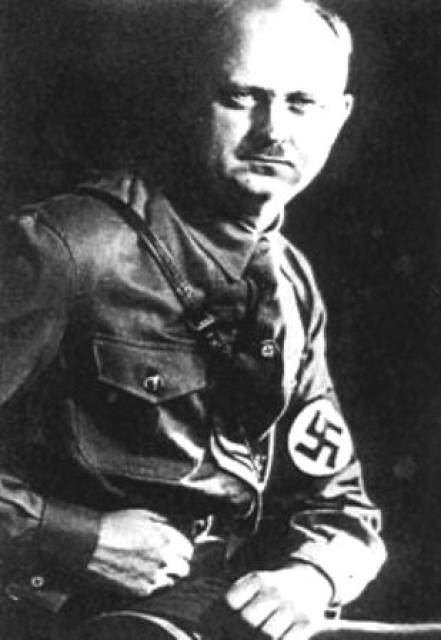
Wilhelm Gustloff was a German Nazi organizer who led the Swiss branch of the National Socialist German Workers’ Party (NSDAP) during the 1930s. He built the party’s presence among German nationals living in Switzerland and became a prominent propagandist for National Socialism abroad. His 1936 assassination in Davos was exploited by the Nazi regime for antisemitic propaganda, and the regime later attached his name to a ship and a public cult of martyrdom.
Early life and move to Switzerland
Gustloff was born in Schwerin, in the German Empire, on January 30, 1895. He grew up in a middle-class family in an atmosphere of German nationalist politics and trained as a bank clerk after completing secondary school. A chronic lung condition kept him from serving at the front in the First World War. In 1917 he moved to Switzerland, where he worked at the Davos branch of the Swiss Meteorological Institute.
In the years after the war, Gustloff gravitated toward far-right nationalist groups. He joined the German National Association of Commercial Employees’ nationalist protection league in 1921 and became a member of the NSDAP in 1929. The party appointed him to lead its Swiss regional organization in 1932.
Nazi organizing in Switzerland
From Davos, Gustloff helped establish NSDAP groups and youth organizations across Switzerland, targeting German expatriates and visitors at Swiss resorts with Nazi ideology. He used public events and personal networks to promote Hitler’s movement beyond Germany’s borders. His activity drew attention from Swiss authorities, who viewed Nazi political organizing on Swiss soil with concern.
Gustloff’s role made him a significant representative of the Nazi regime abroad, but his visibility also made him a target. David Frankfurter, a Jewish medical student from Yugoslavia studying in Switzerland, followed his activity and came to see him as a symbol of the persecution of Jews under the Nazi government.
Assassination and Nazi propaganda
On February 4, 1936, Frankfurter went to Gustloff’s home in Davos and shot him dead. After his arrest, Frankfurter said he had acted in protest against the German regime’s antisemitic policies. A Swiss court convicted him and sentenced him to 18 months in prison, followed by expulsion from Switzerland.
The Nazi leadership used the murder to intensify antisemitic propaganda and publicly recast Gustloff as a martyr of the movement. At the same time, it sought to prevent retaliatory attacks against Jews that might disrupt the Winter Olympics in Garmisch-Partenkirchen, scheduled to begin two days later. His funeral in Schwerin was staged as a major public spectacle, attended by tens of thousands of Nazi Party, SA and SS members.
In 1937, a passenger ship built for the Nazi “Strength Through Joy” leisure organization was named after Gustloff. It later became known for a separate tragedy: the ship was sunk in 1945 while carrying refugees and others fleeing the advancing Soviet army. Gustloff’s own legacy remains tied to his work spreading Nazism abroad and to the regime’s transformation of his killing into a propaganda symbol.