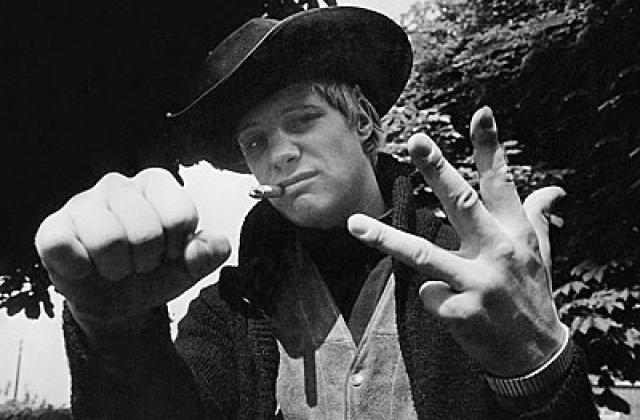
Wilhelm Homburg
 Mexico
Biography of Wilhelm von Homburg
Wilhelm von Homburg, a German wrestler, boxer, and actor, is best known for his role as the ancient Carpathian warlord Vigo in the film "Ghostbusters II" in 1989. Norbert Grupe was born on August 25, 1940 in Berlin, Germany. Due to Allied air raids on Berlin, his family moved to West Germany. Norbert had an athletic build and constantly worked on his muscles, so his father, a baker by profession, introduced him to wrestling. In the 1950s, the family emigrated to the United States, where Norbert and his father traveled across all states in search of competitions. His wrestling name sounded like a nickname for annoying fans in English, so for advertising purposes, Norbert changed his name to the much more resonant pseudonym Wilhelm von Homburg, which was associated with an unbeatable Teutonic knight by the audience. Additionally, he carefully maintained the image of a "bad boy".

Boxing Career
Von Homburg became interested in sports after the fateful third fight between Emile Griffith and Benny Paret, after which Paret fell into a coma and died. Wilhelm's first match took place on July 20, 1962 in Los Angeles against Sam Wyatt, lasting four rounds. Over 8 years, he had 46 fights and won 29 of them in the light heavyweight and heavyweight divisions (with 6 draws and 11 losses). On December 11, 1970, Wilhelm had his last fight, losing to Rudiger Schmidtke in the 10th round in Cologne. Despite his successful start, many fans believed that he was truly an aristocrat of noble blood and had spent his childhood in luxury due to his magnificent pseudonym.

Acting Career
In 1965, while contemplating life after his sports career, Wilhelm made his film debut, playing a small role in the German World War II movie "Morituri" with Marlon Brando in the lead role. A year earlier, he appeared in an episode of the American TV series "Gunsmoke". The following year, he got another small role in Alfred Hitchcock's spy thriller "Torn Curtain", starring Paul Newman and Julie Andrews. Following his defeat in the ring against Oscar Bonavena in 1969, von Homburg appeared on television the next day. After reporter Rainer Gensler made several derogatory remarks about his boxing career and provocative lifestyle, Wilhelm spent 10 silent minutes on live television, not answering any of the reporter's questions and smiling at him with a strange sarcastic smile.
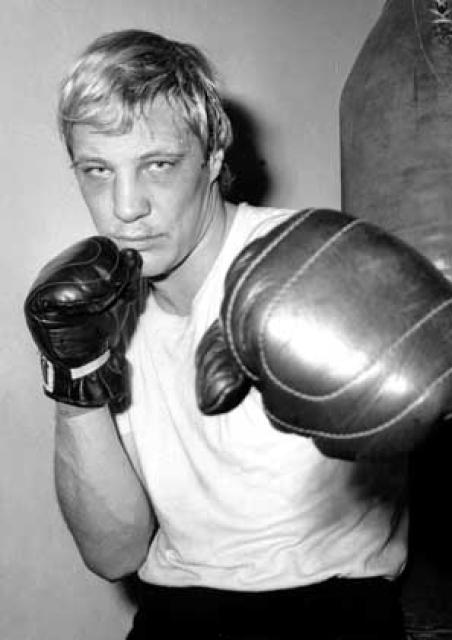
Wilhelm von Homburg played around a dozen modest roles in films and on television in the 1960s and a similar number in the late 1980s to early 1990s. He portrayed strong muscular guys, villains and their henchmen, killers, and pimps. After the German drama "Stroszek" in 1977, his acting career was interrupted as the former boxer ended up in prison, and he was able to return to the big screen only in 1988, playing one of the German terrorists in the film "Die Hard" led by Alan Rickman's character. This was followed by the release of the second installment of "Ghostbusters", where he played his most memorable role as Vigo, a 17th-century Eastern European tyrant whose spirit comes to life in his portrait in an American museum, enslaves the curator, and demands a child to possess.
In 1992, von Homburg landed a leading role in the film "Diggstown", where his partner was James Woods. He portrayed Charlie Diggstown, a boxer who suffered brain damage and couldn't speak as a result of a fight. Constantly surrounded by paparazzi, Wilhelm von Homburg was always a public figure and attracted more attention than many world boxing champions. He had scandalous romances, and his unusual habit of smoking was widely known – he was rarely seen without a cigar. He lived in an infamous crime-ridden neighborhood, associated with drug dealers and pimps. Despite facing charges for various crimes, including extortion, pimping, and drug trafficking, and spending five years in prison, German youth considered him as an example to follow. Due to his long hair, he was nicknamed the "Boxing Beatle", and he was also called the "German answer to Muhammad Ali".
In his later years, von Homburg, who was in great need, lived in Los Angeles in an apartment filled with souvenirs from his boxing career and drove around in an old Volkswagen. He tried to revive his acting career in Hollywood, enjoyed the company of his dog, and engaged in horseback riding in Griffith Park. On March 10, 2004, Wilhelm von Homburg passed away from cancer in Puerto Vallarta, Mexico, just a few months after German documentarian Gerd Koske, who released the documentary film "The Boxing Prince" about von Homburg's life in 2002, which received several awards at film festivals.


