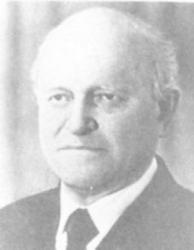
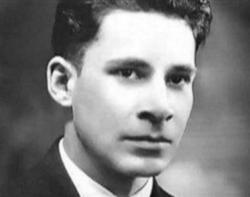
William Bragg
 Great Britain
- William Lawrence Bragg: Pioneering Physicist and Nobel Laureate
- Academic Career
- Cavendish Laboratory and Royal Institution
- Scientific Contributions
- Honors and Legacy
William Lawrence Bragg: Pioneering Physicist and Nobel Laureate
Early Life and EducationWilliam Lawrence Bragg was born on March 31, 1890, in Adelaide, Australia, to William Henry Bragg, a prominent physicist. He inherited his father's passion for science and excelled in his studies. Bragg attended the University of Adelaide and later the University of Cambridge, where he earned his first-class honors degree in 1912.
Academic Career
After graduating, Bragg embarked on a remarkable academic career. From 1919 to 1937, he served as Professor of Physics at the University of Manchester, succeeding the legendary Ernest Rutherford. In 1937-1938, he became Director of the National Physical Laboratory.
Cavendish Laboratory and Royal Institution
In 1938, Bragg was appointed Professor and Director of the Cavendish Laboratory at the University of Cambridge, a prestigious institution that had been home to some of the world's greatest physicists. He held this position until 1953 before becoming Director of the Royal Institution in 1954.
Scientific Contributions
Bragg's scientific contributions were profound and spanned various fields, including:
- X-ray Diffraction Theory:He developed the Bragg-Wolf equation independently of Johannes Wolf, which described the relationship between the angle of reflection of X-rays from crystal planes and the distance between those planes.
- X-ray Crystallography:He devised methods for interpreting X-ray diffraction patterns using Fourier transforms, revealing the structures of numerous silicates.
- Holography:In 1939, Bragg used X-rays to obtain an optical image of a crystal's atomic structure, pioneering the concept of holography.
- Biomolecular Structure:Collaborating with J.D. Bernal and L. Pauling, Bragg determined the structure of hemoglobin using X-ray crystallography, laying the foundation for structural studies of biological molecules.
Honors and Legacy
Bragg's outstanding contributions to physics were recognized with numerous awards, including the Hughes Medal (1931), the Copley Medal (1966), and the Royal Medal (1946). He passed away on July 1, 1971, in Ipswich, England, leaving an enduring legacy as one of the most celebrated physicists of the 20th century.