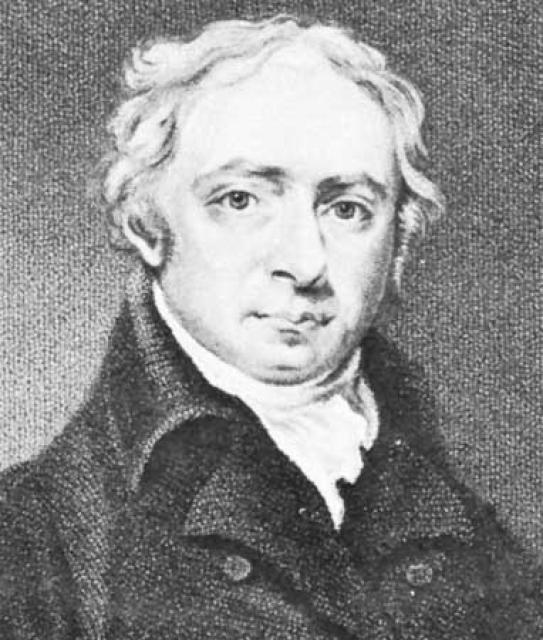
William Lisle Bowles
 Great Britain
- Biography of William Lisle Bowles
- Early Life and Education
- Family Background
- Career
- Poetry and Criticism
- Later Life and Legacy
Biography of William Lisle Bowles
William Lisle Bowles was an English clergyman, poet, and critic. Born into a family of clergy members, Bowles achieved considerable success in religious matters. However, he also excelled in fields unrelated to religion, such as being a talented critic and a competent poet.
Early Life and Education
Bowles was born in King's Sutton, Northamptonshire, and his father was a vicar. At the age of 14, he entered Winchester College, where he was under the guidance of Dr. Joseph Warton. In 1781, Bowles received a scholarship to Trinity College, Oxford. Two years after his enrollment, he won the Latin Prize for his poem.
Family Background
Bowles came from a lineage of English clergymen. His great-grandfather, Matthew Bowles, his grandfather, Thomas Bowles, and his father, William Thomas Bowles, were all priests.
Career
After graduating from Oxford, Bowles followed in the footsteps of his ancestors. In 1792, he was appointed vicar of Chicklade, Wiltshire. In 1797, he became the vicar of Dumbleton, Gloucestershire, and in 1804, he was entrusted with Bremhill, Wiltshire. It was in Bremhill where Bowles wrote a poem that later adorned the statue of Maud Heath. In the same year, Bishop John Douglas granted Bowles the benefice of a prebend at Salisbury Cathedral. In 1818, Bowles became the chaplain to the Prince Regent, and in 1828, he was elected a parish priest in Salisbury.
Poetry and Criticism
In 1789, Bowles published a small collection of poems titled "Fourteen Sonnets." This collection was warmly received, not only by the general public but also by well-known poets and critics like Samuel Taylor Coleridge and Wordsworth. Bowles' sonnets represented a revival of an older, more pure poetic style. They stood out amidst the complex and often banal poetry of the time. Bowles attempted to write longer works but they were not as successful as his sonnets. However, these longer works still showcased his purity of sentiment, vivid imagination, and overall high level of cultural knowledge.
Later Life and Legacy
William Lisle Bowles passed away on April 7, 1850, at the age of 87. He left behind a legacy as an eminent clergyman, critic, and poet. Despite facing criticism himself, Bowles remained dedicated to his passion for poetry throughout his life.