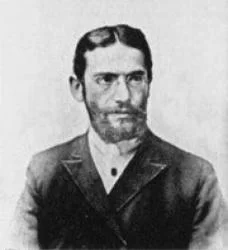
Yuriy Kots
- A Talent from Stalino
- Champion and Soviet Championship Finalist
- The Donetsk Chess Scene and a Second Career
Yuriy Kots was a chess master whose sharp, resourceful play made him one of the standout figures in Donetsk’s chess life. Competing first for the Ukrainian Soviet Socialist Republic and later remembered as a Ukrainian player, he reached the finals of the Soviet championship and won the Ukrainian title twice. He never became a grandmaster, but his reputation rested on more than titles: colleagues recalled an instinctive competitor whose tactical imagination and practical nerve could make even an endgame feel like a story.
A Talent from Stalino
Kots was born on December 9, 1933, in Stalino, the city now known as Donetsk. He began attracting notice as a teenager. At the 1950 Soviet youth team championship, he played on the top board for the Ukrainian team and finished first individually, helping the team take second place. His early results marked him out as one of the most promising young players in the republic.
He studied geology at the Stalino Industrial Institute and later worked as a mining engineer, balancing a professional life outside chess with serious competition. In 1952, he earned the title of Master of Sport of the USSR. He represented clubs including Nauka and Avangard, and his strong performances in Soviet team competitions repeatedly put him alongside the country’s elite.
Champion and Soviet Championship Finalist
Kots won the Ukrainian championship twice and qualified for several finals of the USSR championship, a demanding arena populated by world-class players. He held his own in fields that included leading Soviet stars, finishing respectably among the middle of the standings. His games were admired for their energetic combinations, imaginative decisions, and ability to find practical chances in complicated positions.
Contemporary and later accounts often placed him among the strongest masters of his generation, though he did not reach grandmaster rank. His career offers a glimpse into the formidable depth of Soviet chess: even a player capable of contesting national finals could remain outside the small circle of grandmasters.
The Donetsk Chess Scene and a Second Career
Kots became a distinctive local figure, known for a personality that was as memorable away from the board as his combinations were over it. Stories from fellow players describe his love of cards and other games of chance, and suggest that this side of his life sometimes competed with the discipline needed for a sustained chess ascent. Those anecdotes became part of his lore, though his competitive achievements stood on their own.
As his playing strength and health declined, he turned increasingly to coaching. For several years he worked with young players in Donetsk, passing on a practical, analytical approach: study positions deeply, compare candidate moves, and work through the consequences rather than rely on formula. Among the players associated with his coaching were future Ukrainian grandmaster Evgeny Miroshnichenko and other strong competitors.
Kots died in Donetsk on May 6, 2001, after a serious illness. He is remembered as a two-time Ukrainian champion, a respected Soviet-era master, and an influential coach whose contribution continued through the next generation of Donetsk chess.