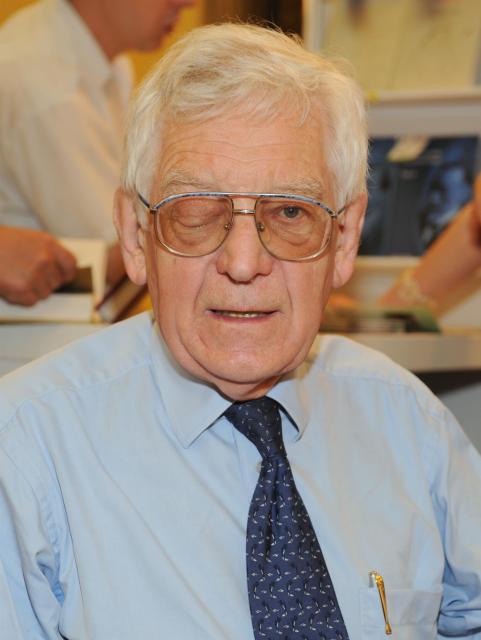
Zdzislaw Najde
 Poland
- Early Life and Education
- Academia and Literary Research
- Dissidence and the Solidarity Movement
- Exile and Radio Free Europe
- Return to Poland
- Post-Communism and Influence
- Euromaidan and Legacy
Early Life and Education
Born in Warsaw to PПС activists, Zdzisław Najder spent his childhood in Wołbuż during the German occupation. He earned degrees in philosophy (1952) and Polish literature (1954) from Warsaw University before pursuing doctoral studies in English literature and philosophy at Oxford.
Academia and Literary Research
Upon returning to Poland, Najder worked at the Institute of Literary Research and the journal Twórczość. He became a renowned expert on Joseph Conrad, publishing "Joseph Conrad: A Chronicle," which was translated into English and became a seminal work in the field.
Dissidence and the Solidarity Movement
An anti-communist dissident, Najder co-founded the Polish Independent Agreement (PNS) in 1975. He played a key role in shaping its agenda for national independence and democratic reforms. In 1980, he joined the Solidarity trade union, becoming a prominent expert.
Exile and Radio Free Europe
After the imposition of martial law in 1981, Najder remained in Oxford. In 1982, he became the director of the Polish section of Radio Free Europe, playing a crucial role in supporting underground Solidarity and consolidating its organization. In 1983, he was sentenced to death in absentia by the Polish authorities.
Return to Poland
With the collapse of communism in 1989, Najder returned to Poland and became a political advisor to President Lech Walesa and Prime Minister Jan Olszewski. However, allegations of collaboration with the communist security services surfaced, which he later explained as having been part of a disinformation strategy.
Post-Communism and Influence
Najder remained an influential public figure and political expert in Poland. He served as a member of the council of the Museum of World War II in Gdańsk and headed the Warsaw-based Weimar Club. His political predictions made through the PNS largely came to fruition, earning him recognition at the state level.
Euromaidan and Legacy
In his later years, Najder supported the Ukrainian Euromaidan movement. He passed away in 2021, leaving behind a legacy as an outstanding and controversial figure whose contributions to Polish literature, dissidence, and politics continue to be debated and remembered.


