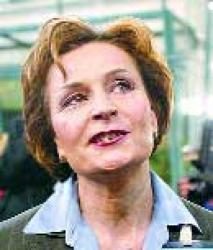
Zenko Suzuki
 Japan
JapanBiography of Zenko Suzuki
Zenko Suzuki was a Japanese statesman and politician who played significant roles in the prefectural and national organizations of the fishing industry in Japan. Born into a family of fishermen, Suzuki graduated from the Institute of Fisheries under the Ministry of Agriculture and Forestry in Tokyo in 1935. After World War II, he actively entered politics and became a member of the Socialist Party of Japan, through which he was elected to the country's parliament in 1947. In 1948, he switched to the Liberal Party of Japan.
With the formation of the Liberal Democratic Party of Japan in 1955, Suzuki became a member, and his entire subsequent career was associated with this organization. He held various influential positions in the leadership of the party and served in multiple Japanese governments. He was the Minister of Health and Welfare from 1965 to 1966 in the cabinet of Eisaku Sato, and the Minister of Agriculture and Forestry from 1976 to 1977 in the cabinet of Takeo Fukuda.
On May 16, 1980, the government of Japan, led by Masayoshi Ohira, faced a vote of no confidence, which resulted in the dissolution of the parliament and the calling of snap elections on June 22. On June 12, 1980, Masayoshi Ohira passed away suddenly, and as a result, the Liberal Democratic Party of Japan was able to expand its representation in both houses of parliament. In these circumstances, Zenko Suzuki was elected as the chairman of the Liberal Democratic Party on July 15, 1980. On July 17, 1980, he formed a new cabinet of ministers and served as the Prime Minister from July 17, 1980, to November 27, 1982.
During his tenure, the Suzuki Cabinet pursued a close military cooperation with the United States. For instance, Japan agreed to allow the deployment of American aircraft capable of delivering nuclear weapons at the Misawa Air Base on Honshu Island. However, significant economic and trade frictions between the two countries persisted. Additionally, Suzuki continued to develop relations with China. Although the Chinese side protested in July 1982 regarding the distortion of Sino-Japanese relations in Japanese textbooks, it did not hinder discussions on economic cooperation between the two countries. In particular, Suzuki made an official visit to China in September-October 1982 to commemorate a decade of normalized relations between the two countries.
Japanese-Soviet relations remained complex. Japan continued to insist on its claim to the disputed "Northern Territories." In September 1981, Suzuki made a demonstrative inspection of the Southern Kuril Islands during a helicopter flight. This gesture later became a kind of tradition in Japanese politics, followed by Japanese Prime Ministers Yoshiro Mori in April 2001 and Junichiro Koizumi in September 2005. The Japanese government adhered to the doctrine of the inseparability of economics from politics, imposing significant restrictions on trade with the Soviet Union.
Suzuki attended the funeral of Leonid Brezhnev. The Suzuki government committed to ensuring the protection of international sea lanes within 1000 nautical miles of Japanese territory. The domestic policy of the Suzuki cabinet was characterized by a noticeable strengthening of militaristic tendencies. The state budget provided for a disproportionate increase in military spending compared to other areas. The government approved a plan for further growth of military expenditures from 1983 to 1987 by 70% compared to the previous five-year period.
In May 1982, a special committee of the Liberal Democratic Party announced a draft revision of the Japanese constitution, including a change to the article prohibiting Japan from having armed forces. In 1982, some Japanese newspapers and television channels reported that the Ministry of Education ordered changes in history textbooks. In particular, it was proposed to replace the word "invasion" with "advance" in the texts, along with corresponding modifications. After a public scandal, the government issued a statement denying any plans to revise school history textbooks.
The Suzuki Cabinet accepted the recommendations of the special advisory council on the privatization of state railways and the dismissal of about a third of their employees, as well as the transfer of several other state-owned enterprises into private hands. In September 1982, the Suzuki government, acknowledging its inability to eliminate the budget deficit, announced a freeze on wages at state-owned enterprises. Amid mass dissatisfaction with the government's economic plans, intra-party conflicts intensified within the Liberal Democratic Party, and Suzuki was forced to resign as the party's leader and prime minister of the country. He explained his departure from leadership positions in the party and government by his desire to maintain harmony within the party and government, and he did not seek reelection as the head of the party and government after his two-year term. He was soon replaced in these positions by Yasuhiro Nakasone.
Zenko Suzuki's daughter, Tikako Suzuki, is the wife of former Prime Minister of Japan, Taro Aso. His son, Shunichi Suzuki, is an active member of the Liberal Democratic Party and a member of the Japanese parliament. He also served as the Minister of the Environment from 2002 to 2003 in the cabinet of Junichiro Koizumi.