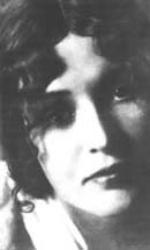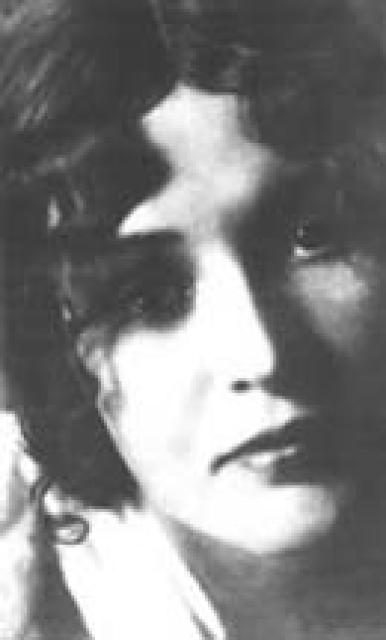
Zinaida Raikh
Zinaida Raikh was a Soviet stage actress whose rise to prominence was closely tied to the experimental theater of director Vsevolod Meyerhold. She began acting in her late twenties and became one of the leading performers in his company, earning acclaim for her roles in modern productions of Russian classics. Her life was also bound to two major cultural figures: poet Sergei Yesenin, her first husband, and Meyerhold, whom she later married.
Early Life and First Marriage
Raikh was born on July 3, 1894, in the village of Blizhniye Melnitsy near Odessa, then part of the Russian Empire. Her father, Nikolai Raikh, worked as a railway engineer and held socialist political views that influenced his daughter’s early interests. She studied in Kyiv and later in Petrograd, where she took courses in history, literature and law, as well as foreign languages and sculpture.
After completing her studies, she worked as a secretary and typist for the Socialist Revolutionary newspaper *Delo Naroda*. There she met Yesenin, then an emerging poet. They married in 1917 and had two children, Tatyana and Konstantin. Their relationship was unsettled, and the couple separated before officially divorcing in 1921. Raikh raised the children, who were later adopted by Meyerhold.
Actress at the Meyerhold Theatre
Raikh’s path to the stage began in Moscow in 1921, when she enrolled in Meyerhold’s State Higher Theatre Workshops. He was her teacher and director, and she became his partner; they married in 1922. Her professional stage debut came on January 19, 1924, as Aksyusha in Alexander Ostrovsky’s play *The Forest*.
Raikh’s work at the State Theatre named for Meyerhold, commonly called GosTIM, soon made her a celebrated Moscow actress. Over roughly thirteen years with the company, she played more than ten roles. Among her best-known performances were Anna Andreyevna in Nikolai Gogol’s *The Government Inspector* and Sophia in Alexander Griboyedov’s *Woe from Wit*. She was awarded the title Honored Artist of the Russian Soviet Federative Socialist Republic.
Meyerhold’s theater was known for its bold, highly stylized productions, and Raikh became one of its defining faces. Their Moscow apartment also hosted artists, writers, actors and foreign visitors, serving as a lively salon during a period of growing political danger.
Repression and Death
The authorities closed Meyerhold’s theater in 1938. He was arrested in June 1939, and Raikh protested the treatment of her husband in a letter to Joseph Stalin. On the night of July 14–15, 1939, she was attacked and stabbed in her Moscow apartment. She died on July 15, a few weeks after Meyerhold’s arrest. The crime has remained one of the unresolved mysteries of the Stalin era; the identity of her killers has not been established conclusively.
Legacy
Raikh’s life joined the intimate history of Soviet cultural circles with the upheaval of state repression. Her performances helped make Meyerhold’s theater a major force in Russian stage history, while her murder became inseparable from the violence surrounding the theater’s suppression and her husband’s arrest. She was buried in Moscow’s Vagankovo Cemetery, near Yesenin’s grave.