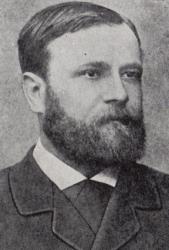
Adolf Kaegi
 Switzerland
- Early Life and Education
- Academic Career
- Contributions to Classical Philology
- Educational Reforms
- Legacy
Early Life and Education
Ulrich von Wilamowitz-Moellendorff was born in 1848 in Markowitz, a village in the Prussian province of Posen. He began his studies at the University of Bonn in 1867, where he excelled in classical philology. Wilamowitz-Moellendorff furthered his education at the University of Berlin, where he studied with Theodor Mommsen and received his doctorate in 1870.
Academic Career
In 1876, Wilamowitz-Moellendorff was appointed Professor of Classical Philology at the University of Greifswald. He later held professorships at the universities of Göttingen (1883-1891) and Berlin (1891-1921). Wilamowitz-Moellendorff's academic career was marked by his exceptional scholarship and his commitment to rigorous research.
Contributions to Classical Philology
Wilamowitz-Moellendorff's research primarily focused on ancient Greek and Sanskrit. He was a leading authority on Greek literature, history, and culture. His major works include "Kritische Geschichte des Spartanischen Staates von 500 bis 431 v. Chr." (1873) and "Der Rigveda, die älteste Literatur der Inder" (1881).
Educational Reforms
Wilamowitz-Moellendorff was also a pioneer in educational reform. He believed in simplifying the teaching of Greek and Latin. His "Griech. Schulgrammatik" (1892) and "Kurzgefasste griech. Schulgrammatik" (1893) aimed to make classical languages more accessible to students.
Legacy
Ulrich von Wilamowitz-Moellendorff was one of the most influential classical philologists of his time. His groundbreaking research and innovative teaching methods left a lasting impact on the field. His work continues to be studied and admired by scholars today.