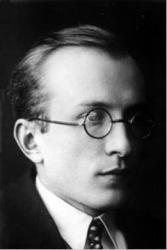
Aleksander Vostokov
 Germany
Alexander Vostokov - The Famous Philologist
Alexander Khristoforovich Vostokov, a renowned philologist, was born on March 16, 1781, in Arensburg, on the island of Saaremaa, to a German-speaking family named Ostenek. Despite initially speaking German, at the age of seven, he already knew Russian and listened to the fairy tales of Sergeant Saveliy in the garrison.
Education and Early Career
Vostokov entered the St. Petersburg Noble Land Corps and fully adopted the Russian language. By the age of thirteen, he had been writing poetry for thirteen years. Although he showed great aptitude, his stuttering hindered him. As a result, he was transferred to the Academy of Arts in 1794, where he learned French. After completing his studies, he spent three years as a pensioner, although he had no interest in the arts. His literary and scientific works first appeared in the journals of the Free Society of Lovers of Literature, Science, and the Arts, of which he became a member in 1801. His poems were collected and published under the title "Lyrical Experiments" (St. Petersburg, 1805-1806; reissued in 1821). While these poems were artistically weak, they were not devoid of ideas and occasionally showed inspiration, such as in "To Harpocrates." Notably, Vostokov unsuccessfully attempted to write in the meter used in classical poetry. His critical articles, in which he served as a censor for the society, were of little significance, only focusing on the correctness or incorrectness of certain expressions. He served in the legislative drafting commission, the Public Library, and the Department of Spiritual Affairs.
Contribution to Slavic Studies
In 1803, Vostokov began studying Old Russian and Church Slavonic languages. By 1810, he was well-versed in significant works such as "Russian Truth," "Teachings of Vladimir Monomakh," "The Tale of Igor's Campaign," "Sviatoslav's Collection of 1076." In 1810, he presented his translation of Dobrovsky's notes on Schlezer's discussions on Old Church Slavonic language, accompanied by his own annotations. In 1808, he contributed several notes to Johann Born's "Concise Guide to Russian Grammar," which revealed his keen observation and accurate description of linguistic facts. His essay on Russian versification, titled "An Essay on Russian Versification," was published in the St. Petersburg Messenger in 1812 and later as a separate publication in 1817. In this work, Vostokov accurately determined the meter and stress patterns in folk poetry for the first time. In 1820, his highly influential work, "A Treatise on the Slavic Language Serving as an Introduction to its Grammar," was published in the "Works of the Society of Lovers of Russian Literature at Moscow University," Vol. XVII. In this work, Vostokov identified the chronological position of Church Slavonic language monuments, distinguished it from Old Russian, explained the significance of nasal and voiceless vowels, the use of wide vowels after back consonants, the presence of nasal vowels in Polish, the formation of adjective endings, and revealed the absence of gerunds and the presence of a supine form, which he called the "attainment inclination." These findings were groundbreaking not only for Russian scholars but also for European linguists. The "attainment inclination" had already been noted by Dobrovsky as the supine. However, Dobrovsky, who was publishing "Institutiones Linguae Slavicae Dialecti Veteris," contemplated abandoning his work after reading Vostokov's treatise but was persuaded otherwise by Kopitar. The Russian Academy and other scientific societies elected Vostokov as their member.
Later Career and Contributions
Vostokov then devoted himself to describing the manuscripts of Kiev Metropolitan Yevgeny and the Lavrentiev List of the Nestor Chronicle. He participated in Keppen's "Bibliographic Sheets," where he published, among other things, an article about the Suprasl Manuscript. In 1827, he wrote his article "Grammatical Explanations for Three Articles of the Freising Manuscript" (in "Collection of Slavic Monuments Located Outside Russia"), which was highly regarded for its flawless text edition and accurate observations. His publication of the legend "The Martyrdom of St. Wenceslaus, the Prince of Bohemia" ("Moscow Messenger," 1827, No. 17) was of great importance. In 1824, after leaving various institutions, Vostokov, who had severed ties with Count N.P. Rumyantsev, had the opportunity to describe the manuscripts in his collection. Upon the Count's death, his collection became state property, and Vostokov was appointed as its curator in 1828. After serving as a manuscript custodian at the Imperial Public Library, Vostokov became the senior librarian at the Rumyantsev Museum. In the same year, Vostokov published two grammars: "Abridged Russian Grammar" and "Russian Grammar, More Fully Explained According to the Outline of the Abridged Grammar." These textbooks were remarkable for their time, although Vostokov's fear of going against established philological traditions was evident. In 1841-1842, under his editorship, "Historical Acts Relating to Russia, Extracted from Foreign Archives and Libraries" (2 volumes) were published. In 1842, his "Description of Russian and Slavic Manuscripts in the Rumyantsev Museum" was released, which had immense value. It was only after this work that the study of ancient Russian literature and antiquities became possible. In 1843, his equally significant work, "Ostromir Gospel with the Application of the Greek Text of the Gospels and Grammatical Explanations," was published (St. Petersburg), but it has lost its value due to subsequent photo-typographic editions. Around the same time, he wrote a commentary on the Reims Gospel. Among Vostokov's other works, his dictionaries stand out the most. In 1835, he was appointed a member of the committee for the alphabetical dictionary project. However, his dedication to dictionaries increased when he became an ordinary academician in 1841. In 1847, the second volume of the "Dictionary of Church Slavonic and Russian Language," edited by Vostokov, was published, followed by the "Essay on the Regional Great Russian Language" (Supplement to it, St. Petersburg, 1858) in 1852. Vostokov's responsibility for these works was shared with the Department of Philology of the Academy of Sciences. Vostokov's primary focus for many years was the "Slavic-Russian Etymological Dictionary," which he began around 1802, if not earlier. This work was remarkable for its time but remained unpublished (see S. Bulych's "Essay on the History of Linguistics in Russia," Vol. I, 653-667). Instead, he published an extensive "Dictionary of Church Slavonic Language" (St. Petersburg, 1858-1861, 2 volumes). Together with his "Grammar of the Church Slavonic Language" ("Scientific Notes," 1863, Vol. VII), this work became a monumental achievement in Russian scholarship. On February 8, 1864, Vostokov passed away. Vostokov's contributions were recognized both in Russia and abroad. I. Sreznevsky compiled Vostokov's philological works in the book "Philological Observations of A.H. Vostokov" (St. Petersburg, 1865), accompanied by an evaluation in the preface. Vostokov's scholarly correspondence was also published by Sreznevsky ("Collection of the Second Division of the Imperial Academy of Sciences," Vol. V, Issue 2, St. Petersburg, 1873). An extraordinary characteristic of Vostokov's personality was his love for the Russian language, which even led him to change his native surname Ostenek to Vostokov. His remarkable modesty was the reason why the Academy, which was generous in rewarding its members financially, bypassed him. For instance, when the most untalented secretary of the Academy, P.I. Sokolov (mockingly called "osudar" in the satire by Voeikov, "The House of Madmen"), received 13,000 rubles "for tireless work and zeal," Vostokov received the same reward as 14-year-old girl Shakova, who received 500 rubles for her poetry.