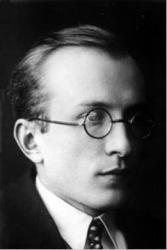
Andrey Vostrikov
- Early Life and Education
- Academic Career and Research
- Arrest and Execution
- Legacy
- Personal Life
- Rehabilitation and Recognition
Early Life and Education
Alexander Ivanovich Vostrikov was born in Ogarevka, Russia, in 1898. His parents were both religious, and young Vostrikov grew up in a devout household. He attended the Petrograd University and graduated in 1924 with a degree in public education.
Academic Career and Research
After graduating, Vostrikov began his academic career as a research assistant at the Institute of Comparative History of Literatures and Languages of the West and East. He studied under renowned scholars such as Fyodor Shcherbatsky (Sanskrit and Tibetan) and Boris Vladimirtsov (Mongolian). He also became a lecturer at the Leningrad Institute of Living Oriental Languages and Leningrad State University.
Vostrikov's research focused on classical Indo-Buddhist philosophy, particularly the Buddhist logic text "Kalachakra-tantra." He undertook several research trips to the Aginsky Datsan in the Buryat-Mongolian ASSR, where he studied Tibetan daatsans and their philosophical teachings.
Arrest and Execution
In 1937, Vostrikov was arrested by the NKVD on charges of treason. He was executed on September 26, 1937, and buried in the Donskoye Cemetery in Moscow. His ashes were later transferred to the Donskoy Monastery.
Legacy
Despite his untimely death, Vostrikov's work has had a lasting impact on Tibetan studies. His monograph, "Tibetan Historical Literature," published posthumously in 1962, is considered a classic in the field. His other unpublished manuscripts, which were lost after his arrest, are believed to have been of great significance.
Personal Life
Vostrikov was married twice. His first wife, Tatiana, was the daughter of his father's second wife. His second wife was Nina Pavlovna Yaroslavtseva, with whom he had a son, Nikita.
Rehabilitation and Recognition
Vostrikov was rehabilitated in 1956, and his reputation has been restored. He is now recognized as a prominent figure in Tibetan and Buddhist studies, and his contributions to the field continue to be valued.