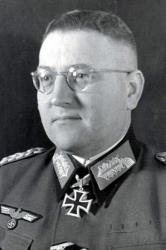
Alexander Linzingen
 Germany
- Early Life and Military Career
- Franco-Prussian War
- Rise Through the Ranks
- World War I
- Commander of the Southern Army:
- Commander of the Bug Army and Army Group Linsingen:
- Offensive in Russia:
- Post-War and Legacy
Early Life and Military Career
Hermann von Linsingenwas born in Stendal, Germany, in 1849. He joined the 17th Infantry Regiment in 1868 and was promoted to Lieutenant in 1869.
Franco-Prussian War
Linsingen participated in the Franco-Prussian War (1870-1871), gaining valuable combat experience. After the war, he held various staff positions, including as Commander of a Company (1883) and Adjutant of the 31st Division (1888).
Rise Through the Ranks
In 1889, Linsingen was promoted to Major and became Adjutant of the XIV Army Corps. Subsequently, he commanded a Battalion in the 76th Infantry Regiment (1890), the 4th Grenadier Regiment (1897), the 81st Infantry Brigade (1901), the 27th Württemberg Division (1905), and the II Army Corps (1909).
World War I
Commander in the Western Front:With the outbreak of World War I, Linsingen commanded the II Army Corps in the First Army under General von Kluck. He participated in the Battle of the Marne.
Commander of the Southern Army:
In January 1915, Linsingen took command of the Southern Army, which assisted the Austrians in the Battle of the Carpathians. He was awarded the Pour le Mérite (14 May 1915) and the Oak Leaves for the Pour le Mérite (3 July 1915).
Commander of the Bug Army and Army Group Linsingen:
On July 5, 1915, Linsingen was appointed Commander of the Bug Army. He also became Commander-in-Chief of Army Group Linsingen in September 1915, overseeing operations in Southern Poland. He achieved a significant victory at the Battle of the Bug in the summer of 1915.
Offensive in Russia:
In May 1916, Linsingen led an offensive to halt the Russian Southwestern Front's advance around Kovel. In February 1918, he commanded forces that attacked towards Kiev, Poltava, and Odessa.
Post-War and Legacy
Governor of Berlin and Retirement:After the war, Linsingen served as Governor of Brandenburg and Berlin (1918-1920). He retired from military service in November 1918 and passed away in 1935. Despite his controversial role in suppressing the Spartacist uprising in Berlin, he is remembered as a skilled and successful military leader during World War I.