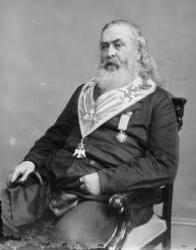
Allvar Gullstrand
 Sweden
- Early Life and Education
- Professional Achievements
- Dioptric Discoveries
- Optical Innovations
- Refractive Correction
- Academic Career
- Legacy and Impact
Early Life and Education
Allvar Gullstrand, born in Landskrona, Sweden, on June 5, 1862, embarked on his academic journey at Uppsala University, where he studied mathematics and natural sciences. His pursuit of knowledge extended to the University of Vienna and culminated at the Karolinska Institute in Stockholm, where he graduated with a medical degree in 1888.
Professional Achievements
Ophthalmic ExpertiseGullstrand's passion for ophthalmology led him to teach at the Karolinska Institute from 1891 onwards. His profound contributions to the field earned him the Nobel Prize in Physiology or Medicine in 1911.
Dioptric Discoveries
Gullstrand's pioneering work on geometric optics and dioptrics of the eye focused on understanding the refraction of light in various media, particularly the human lens. His revolutionary concept of image formation, based on the refractive index of the lens, challenged the traditional theory of collinearity.
Optical Innovations
Gullstrand's relentless pursuit of knowledge led him to design and develop several ophthalmic instruments. His notable inventions include the slit lamp, the binocular indirect ophthalmoscope, and the Gullstrand ophthalmoscope, which enabled detailed examination of the eye's internal structures.
Refractive Correction
Gullstrand's research extended to the development of a new method for calculating refractive and reflective systems. He introduced the concept of dioptria, which became a fundamental unit of measurement in ophthalmic lenses.
Academic Career
Professorship and ResearchIn 1894, Gullstrand ascended to the position of Professor of Ophthalmology at the Karolinska Institute. Subsequently, in 1913, he moved to Uppsala University, where he became Professor and Head of the Department of Physiological and Physical Optics, a position he held until his retirement in 1927.
Legacy and Impact
Allvar Gullstrand's contributions to ophthalmology have had a profound and lasting impact on the field. His research has advanced our understanding of vision and the human eye, while his inventions have revolutionized ophthalmic diagnosis and treatment. The "schematic eye," a model he proposed for optical calculations, remains a cornerstone of modern ophthalmic practice.