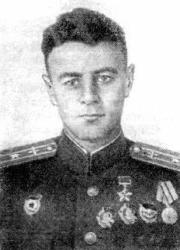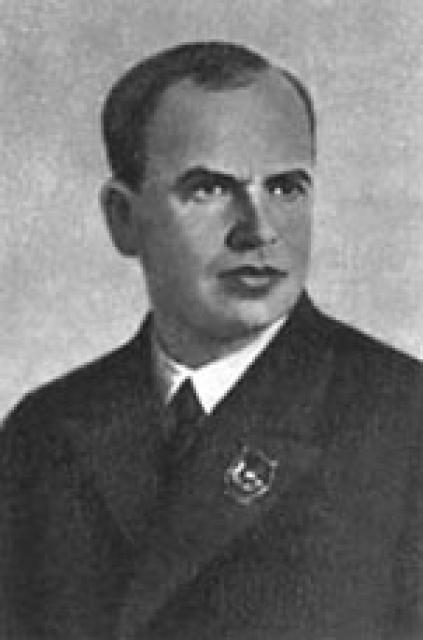
Anatolij Alekseev
 Poland
Biography of Anatoly Alexeev
Anatoly Alexeev was a test pilot, a colonel, and a Hero of the Soviet Union. He was awarded three Orders of Lenin, five Orders of the Red Banner, the Order of the Patriotic War 1st Class, three Orders of the Red Star, and several medals.
Early Life
Anatoly Alexeev was born and raised in Zagorsk, Russia. In 1918, he completed his education at a gymnasium. He joined the Red Army in 1920 and graduated from the Military Electrotechnical School of the Red Army in 1921. Following his graduation, he became an instructor in radio at the Sevastopol School of Naval Aviation.
Expediton with General Nobile
In 1926, Anatoly Alexeev participated in an expedition led by General Nobile. The expedition completed the first transarctic non-stop flight on the dirigible "Norge" from Rome to the North Pole and Alaska. Alexeev served as the commander of the dirigible under General Nobile. The expedition covered a total distance of 13,000 km, with more than 4,000 km over the Arctic. The expedition proved that there was no continent in the central Arctic, contrary to previous beliefs. The success of the expedition in using dirigibles for Arctic exploration was evident, although the scientific research conducted during the expedition was limited.
Expedition to the Arctic
Inspired by the success of the previous expedition, General Nobile planned a new expedition to conduct extensive scientific research in the Arctic. The expedition aimed to explore areas such as Novaya Zemlya, Franz Josef Land, Northern Land, Greenland, and the Canadian Arctic Archipelago. The team included scientists specializing in various fields such as geomagnetism, atmospheric electricity, and oceanography. The expedition was well-prepared and equipped with the best instruments and equipment available at the time.
Tragic Ending
On May 25, 1928, while flying over the Arctic, the dirigible "Italia" encountered bad weather conditions. The strong winds and thick clouds prevented them from landing or conducting scientific observations. Despite their efforts, the expedition was unable to reach the North Pole. On May 25, at 10:33, the dirigible collided with ice floes near the island of Spitsbergen. Eleven members of the crew, including Alexeev, were thrown onto the ice. Six members remained on the damaged dirigible, which was carried away in an unknown direction.
Rescue Efforts
After the accident, the survivors on the ice sent distress signals and attempted to establish communication with rescue teams. It took several weeks for the distress signals to be received and for rescue missions to be organized. Six countries sent expeditions to rescue the crew of the "Italia." Finally, on July 12, 1928, the icebreaker "Krasin" reached the survivors and rescued them. Unfortunately, the search for the crew members on the damaged dirigible continued until September 1928, but no traces of them were found.
Legacy
Anatoly Alexeev's involvement in the ill-fated expedition to the Arctic remains a testament to his bravery and dedication. Despite the tragic outcome, the expedition contributed valuable knowledge to the understanding of the Arctic region. Alexeev's role as a test pilot and his commitment to exploration will always be remembered.