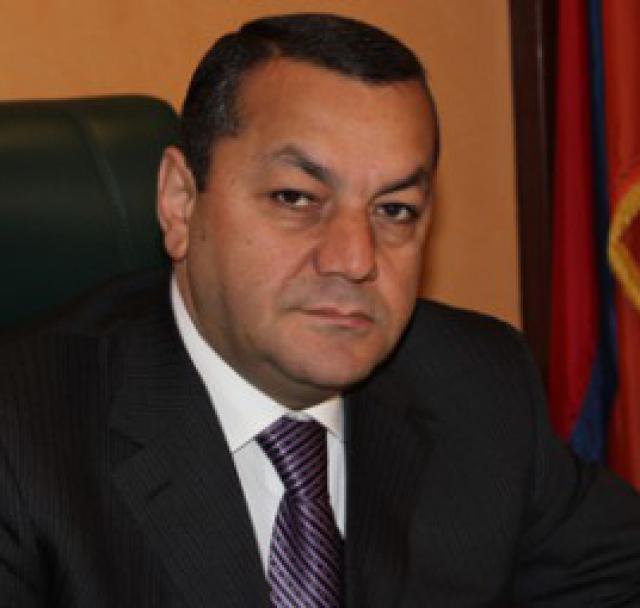
Araik Grigoryan
 Armenia
An economist by training, Araik Grigoryan built a career that joined agriculture and business with public service. He spent years in Armenia’s National Assembly while also leading the board of the Avshar Wine Factory, a prominent enterprise in his home region. His path from a village in Ararat province to national politics reflects the close ties between local economic life and political representation in post-Soviet Armenia.
Early life and education
Grigoryan was born on 10 May 1963 in Avshar, a village in Armenia’s Ararat province. After serving in the Soviet Army from 1982 to 1984, he studied at the Yerevan Institute of National Economy, graduating in 1989 with training in economics and finance.
That same year he began work as a senior inspector in the Ararat tax inspectorate. The role gave him experience with public administration and the region’s business environment. From 1991 to 1994, he ran a private farm, working directly in agriculture during a period of economic upheaval following the dissolution of the Soviet Union.
Business in the Ararat region
Grigoryan’s principal business association has been the Avshar Wine Factory. He became president of its board in 1995 and held a leadership role there while building his political career. The winery is based in the region where he was born, linking his business profile to the local agricultural economy and the production of Armenian wine.
His background as a farmer, economist, and business executive shaped the practical side of his public image. While serving in parliament, he retained a strong connection to the economic concerns of Ararat province and its communities.
Service in the National Assembly
Grigoryan entered the National Assembly in 2003, serving through 2007. He was affiliated with the Armenian Revolutionary Federation (ARF) parliamentary faction and worked on the Standing Committee on Foreign Relations. He returned to parliament in 2007 and served until 2012, with committee assignments that included territorial administration and local self-government.
In 2012, he was again elected to the National Assembly, this time representing a constituency in Ararat province, and served through 2017. His work included the Standing Committee on Economic Affairs. In 2017, he was elected once more, this time on the territorial list of the Republican Party of Armenia. During that parliamentary term, he served on committees dealing with European integration and economic affairs.
The different affiliations across his terms reflect changing political arrangements rather than a single uninterrupted party career. Grigoryan’s public service extended across several convocations and focused on economic, local-government, and foreign-relations matters.
Public profile
Grigoryan’s career combines two roles that have often overlapped in Armenian public life: that of a regional business leader and an elected representative. His work at the winery gave him a continuing presence in Ararat’s economy, while his parliamentary service connected him to national debates and legislative committees. The combination made him a recognizable figure in the province as well as in the National Assembly.
He is married and has four children, according to biographical records published during his parliamentary service. His public record is defined chiefly by his long association with Avshar’s wine industry and by repeated election to the Armenian legislature.


