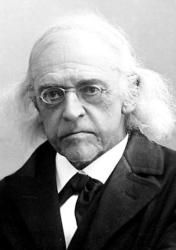
Arnold Joseph Toynbee
 Great Britain
Biography of Arnold Joseph Toynbee
Arnold Joseph Toynbee was an English historian, born in London on April 14, 1889. He received his education at Winchester College and Balliol College, Oxford University. In 1913, he married Rosalind Murray, the daughter of Gilbert Murray, an Oxford professor of classics. Their son, Philip, became a renowned novelist. They divorced in 1946, and in the same year, Toynbee married his longtime assistant, Veronica Marjorie Boulter.
Toynbee's career included various academic positions and accomplishments. From 1919 to 1924, he was a professor of Byzantine studies, Greek language, literature, and history at the University of London. From 1925 until his retirement in 1955, he served as the research director of the Royal Institute of International Affairs and a research associate at the University of London. During World War II, Toynbee served as the director of the Foreign Research and Press Service at the British Ministry of Foreign Affairs. In 1956, he was honored with the Order of the Knights of Honor. Toynbee passed away in York on October 22, 1975.
Contributions and Works
Toynbee was a prolific writer and his publications encompassed a wide range of topics. His scholarly monographs included "The Western Question in Greece and Turkey" (1922) and "Greek Historical Thought" (1924). His most famous work is "A Study of History," which consists of 12 volumes published from 1934 to 1961. He also authored several volumes of essays and lectures. One notable publication is "An Historian's Approach to Religion" (1956), which was based on his Gifford Lectures.
Toynbee followed in the footsteps of Oswald Spengler and his "The Decline of the West" in challenging the traditional concept of the unity of world history. He proposed a comparative study of cultures, highlighting their similarities in the life cycle of emergence, development, and decline. However, Toynbee rejected Spengler's theory of cultures as organisms with a lifespan of 1000 years. He attributed the decline of cultures to moral degeneration and the loss of a creative approach to emerging problems.
While Toynbee's theories and methods faced criticism and his later works diverged from his earlier ideas, he garnered popularity, particularly in American culture. In England, he had more critics than admirers. Nevertheless, his ideas about the historical significance of religion and the productivity of non-materialistic values were considered sound, and even his critics acknowledged his success in popularizing them.