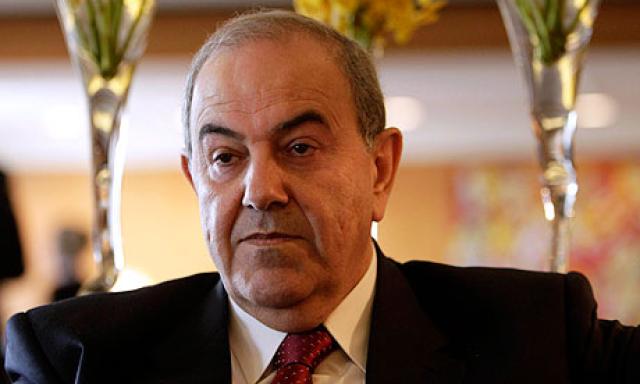
Ayad Allawi
 Iraq
- Ayad Allawi
- Opposition Politics and Return to Iraq
- Interim Prime Minister
- Electoral Politics and Later Offices
- Public Image and Legacy
Ayad Allawi
Early Life and Medical CareerAyad Allawi was born in Baghdad in 1944 or 1945, into a prominent Iraqi family. His father was a physician and parliamentarian, and his family had longstanding connections to public life. Allawi studied medicine at the University of Baghdad and became involved in politics while still a student. He joined the Ba’ath Party, which came to power in 1968, and rose within its ranks before breaking with it in the mid-1970s.
After leaving Iraq, Allawi settled in Britain and continued his medical training and work, becoming a neurosurgeon. His life in exile shaped the next phase of his career. He joined other opponents of Saddam Hussein’s government and helped establish the Iraqi National Accord, an opposition organization that sought to remove the regime. The group built relationships with foreign governments and Iraqi military and political figures. Allawi survived serious attacks while abroad, which he attributed to agents of Saddam’s government.
Opposition Politics and Return to Iraq
For decades, Allawi remained a central figure in exile politics. The Iraqi National Accord attempted to organize opposition to Saddam Hussein and supported efforts to change the regime. Its covert activities and contacts with Western governments later became an important part of the debate about the politics leading up to the 2003 invasion. Allawi’s critics questioned his close ties to the United States and Britain, while supporters presented him as a pragmatic secular alternative to Saddam’s rule.
After the U.S.-led invasion of Iraq in 2003, Allawi returned to the country after roughly three decades abroad. He joined the U.S.-appointed Iraqi Governing Council, a transitional body created under the occupation administration, and served as its president for a rotating term. At a time when Iraq was confronting insurgency, sectarian tension and the difficult task of rebuilding government, Allawi became one of the most visible Iraqi political leaders.
Interim Prime Minister
In May 2004, the Governing Council unanimously selected Allawi to lead the interim government. He became prime minister when formal sovereignty was transferred from the Coalition Provisional Authority to the Iraqi Interim Government on 28 June 2004. His administration was charged with restoring public services, preparing for elections and asserting control amid a worsening security crisis.
The period was defined by violence and political uncertainty. Allawi advocated a strong response to armed groups and sought to rebuild Iraq’s security institutions. His government faced criticism over its closeness to the United States, its handling of detention and security operations, and its ability to establish legitimacy across Iraq’s communities. The battle for Fallujah in late 2004 became one of the most consequential and controversial episodes of his tenure. Allawi remained prime minister until the formation of a new government after the January 2005 elections.
Electoral Politics and Later Offices
Allawi continued to lead the Iraqi National Accord and formed broader alliances around a secular, nationalist platform. In the December 2005 parliamentary election, his Iraqi National List won a smaller share of seats than the leading religious parties, and he moved into opposition. He remained a familiar figure in debates over national unity, the role of former Ba’athists and the balance between Iraq’s religious and ethnic communities.
His political fortunes revived in the March 2010 parliamentary election. The Iraqiya coalition, led by Allawi and including Sunni and secular partners, won the largest number of seats by a narrow margin. The result triggered a prolonged dispute over who had the right to form a government. Nouri al-Maliki ultimately retained the premiership, and Allawi’s bloc did not take the leading role in the new administration. The episode underscored both Allawi’s continuing electoral appeal and the difficulty of turning votes into governing power in Iraq’s divided political system.
Allawi later served as one of Iraq’s vice presidents, holding the office from 2014 until constitutional changes eliminated the vice-presidency in 2018. He continued to comment on Iraqi affairs and to advocate political reconciliation, stronger national institutions and a less sectarian style of government.
Public Image and Legacy
Allawi’s political identity has always been shaped by contrasts. He was a former Ba’athist who became an opponent of Saddam Hussein, a physician who spent much of his life in politics, and an Iraqi exile who returned to lead a government formed during foreign occupation. His supporters have described him as a secular nationalist with experience across Iraq’s political landscape. Critics have emphasized his Western ties and questioned the legitimacy and independence of the institutions he led.
As interim prime minister, Allawi presided over one of the most fragile periods in modern Iraqi history, when a new government was attempting to function amid insurgency and deep political divisions. His later electoral success showed that his coalition could attract a substantial constituency, even as its ability to govern remained constrained. His career reflects the central struggles of post-2003 Iraq: sovereignty, security, national identity and the search for a political system that can represent the country’s diverse communities.


