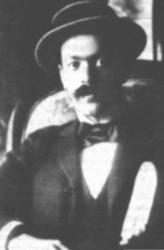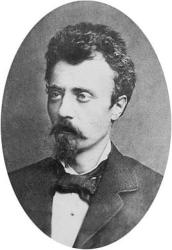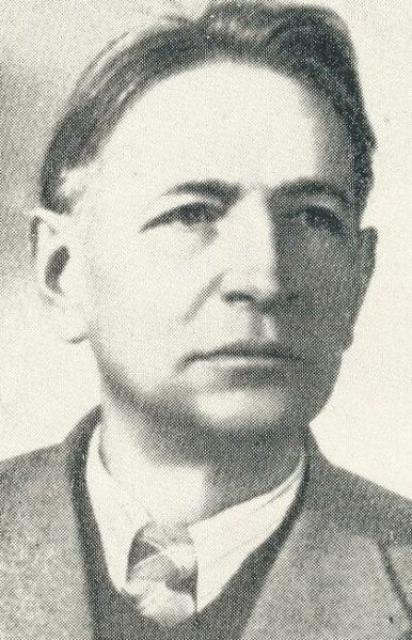
Balys Sruoga
 Lithuania
Biography of Balys Sruoga
Balys Sruoga was a Lithuanian writer, literary critic, literary historian, theater scholar, playwright, publicist, and translator. He was born in 1896 in the town of Bačiai, Lithuania. Sruoga studied at the Real Gymnasium in Panevėžys and later enrolled at the Forestry Institute in Petrograd in 1914. However, his true passion lay in literature, and he subsequently studied literature at the History and Philology Faculty of Petrograd and Moscow Universities from 1916 to 1918.
During his time in Petrograd, Sruoga became acquainted with influential figures such as Jurgis Baltrušaitis, Konstantin Balmont, and Vyacheslav Ivanov. He also participated in the preparation of an anthology of Lithuanian literature in Russian, initiated by Maxim Gorky. In 1918, Sruoga returned to Lithuania and became one of the initiators of the satirical theater "Vilkolakis" (1919-1925).
Sruoga continued his studies at the University of Munich from 1921 to 1924. Upon his return to Lithuania, he began teaching Russian folklore and literature, theater history, and conducting seminars on theater studies at the University of Lithuania in Kaunas, which later became Vytautas Magnus University. He became a professor at Vytautas Magnus University in 1932 and taught there until 1940. During his career, Sruoga also taught at Vilnius University from 1940 to 1943 and after the war from 1945 to 1947.
During World War II, Sruoga was imprisoned in the Stutthof concentration camp from 1943 to 1945. His wife, historian Vanda Daugirdaitė-Sruogienė, fled to the West as the Soviet forces approached Lithuania in 1944 and passed away in the United States. Sruoga himself passed away in 1947 and was buried at the Rossa Cemetery in Vilnius. A memorial plaque was installed on the wall of his former residence in Vilnius to commemorate him.
Sruoga's literary works are diverse and include poetry, historical dramas, and translations. His poetry collections, such as "Sun and Sand" (1920) and "Paths of the Gods" (1923), demonstrate his ability to convey subtle tones and emotional immediacy. His historical dramas, including "In the Shadow of a Giant" (1932), "A Frightening Night" (1935), and "Kazimieras Sapiega" (1947), depict the fate of the Lithuanian people in pivotal moments of history.
Sruoga also made significant contributions to theater studies in Lithuania through his writings on theater and his lectures. His two-volume work, "History of Russian Literature" (1931-1933), based on his lectures, laid the foundation for Lithuanian theater studies. Additionally, Sruoga translated works by prominent Russian and European poets into Lithuanian and vice versa.
His memoir, "Forest of the Gods" (written in 1945, published in 1957), provides an ironic account of his experiences in the Stutthof concentration camp and explores the tragedy of dehumanization. The book has been translated into many languages, including Russian.
Balys Sruoga's contributions to literature, theater, and academia have left a lasting impact on Lithuanian culture. His works continue to be celebrated and studied, and his name graces an auditorium at Vilnius University and a museum dedicated to his life and work in Kaunas.