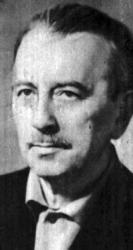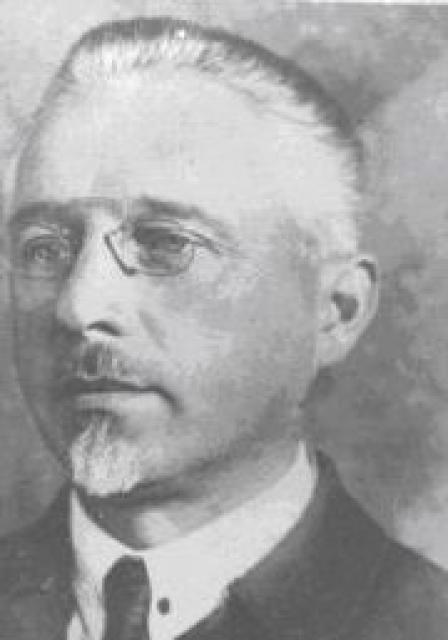
Dmitriy Beling
 Germany
Biography of Dmitry Beling
Dmitry Evstafievich Beling was a renowned Ukrainian ichthyologist and hydrobiologist. He was born on September 13, 1882, in St. Petersburg, in the Russian Empire, into a family of lawyers. Beling completed his education at the Eighth St. Petersburg Classical Gymnasium in 1900 and then enrolled at St. Petersburg University. He later transferred to the Natural Department of the Physical-Mathematical Faculty of the University of St. Vladimir in Kiev. After graduating in 1909, he remained at the university and began working as a laboratory assistant at the zoological laboratory of St. Vladimir University in 1912.
During the pre-revolutionary period, Beling also taught at the Kiev Polytechnic Institute and the Kiev Women's Courses. He then started working at the Dnieper Biological Station, which was founded in 1907. Construction of the station building in the Chertory area on Trukhanov Island began in 1910 under the auspices of the Kiev Society of Nature Lovers. The station building was completed in 1911, and systematic work began in 1912. Trukhanov Island was considered a convenient location for studying freshwater flora and fauna. The building for the Dnieper Biological Station was constructed using funds from Professor Kepen of St. Vladimir University, the station's first director (1909-1910), who bequeathed all his savings and technical equipment to the station. After his death in 1910, Wagner briefly assumed the position of director. From 1912 onwards, the station and its botanical department were led by botanist-algologist V.I. Kozanovsky, and the zoological department was headed by D.E. Beling. The ornithologist of the station was Nikolai Vasilyevich Sharleman.
In 1919, the biostation was relocated slightly upstream of Kiev, to the area of the village of Staroselie in the Kiev region (Goristoye tract). In 1921, the Dnieper Biological Station came under the auspices of the All-Ukrainian Academy of Sciences (VUAN). On February 13, 1934, by the decision of the Presidium of VUAN, the station was transformed into a Hydrobiological Station. In 1935, Beling was awarded the degree of Doctor of Biological Sciences without defending a dissertation. From 1922 to 1937, Professor D.E. Beling served as the director of the station.
In 1932, ideological purges began in the All-Ukrainian Academy of Sciences. Dmitry Evstafievich Beling fell under the repressive pressure. In one of the meetings of the party faction of VUAN, it was recorded in the resolution: "Complete opportunism and rotten liberalism in the amnesty of openly reactionary bourgeois scientists in the Academy, both Great Russian and Ukrainian-national fascists, for example: Kashchenko, Sharleman, Schmalhausen, Beling, etc." On October 28, 1937, D.E. Beling was arrested on charges of "participation in a counter-revolutionary organization and espionage." After several interrogations, he confessed to being a member of the masonic lodge "Zarya" even before the revolution. The masonic lodge operated from 1910-1911 as part of the Union of Great East of the Peoples of Russia. It is possible that the "Kiev Zarya" lodge continued its work. The meetings were held in the building of the Agricultural Syndicate on Fundukleevskaya Street (now Bogdan Khmelnitsky Street). This is mentioned in records from 1916.
In December 1937, D.E. Beling was released with a travel ban, and on March 21, 1938, his "case" was terminated because "recent criminal activity by Beling was not established." On October 9, 1937, the Presidium of the Academy of Sciences of the Ukrainian SSR removed D. Beling from his position as the enemy of the people, but on February 24, 1938, this decision was overturned, and he was appointed as the head of the ichthyological station.
On June 10, 1941, Professor D.E. Beling became the first director of the newly established Hydrobiological Institute of the Academy of Sciences of the Ukrainian SSR. On June 22, 1941, the Great Patriotic War began. Beling's student, the prominent Ukrainian zoologist A.P. Markevich, wrote about this tragic period: "Evacuation began in mid-July 1941. Kiev University was evacuated to Kyzyl-Orda (Uzbekistan). The Academy of Sciences also started preparations for evacuation. Among other employees, I received a ticket with the numbers of the train, car, and seat. The day before departure, I met Professor D.E. Beling. He was very distraught and depressed. It turned out that Professor D.E. Beling did not receive an evacuation ticket. With great regret and pain, Professor D.E. Beling expressed his disappointment in the authorities, who did not appreciate his selfless service to science."
Despite the war, Beling continued to hold the position of director of the Hydrobiological Institute during the German occupation of Kiev. In 1943, during the German retreat, he was evacuated with several colleagues and part of the institute's property to Poznan. He later moved to Germany, where he became a professor at the University of Göttingen in the Federal Republic of Germany. Dmitry Evstafievich Beling passed away on May 28, 1949, from stomach cancer.
Throughout his life, Beling dedicated himself to the study of fish, other animals, and plants in the Dnieper River. By the 1930s, he had become one of the leading Ukrainian experts in the field of freshwater ichthyofauna in the Ukrainian SSR. He was also involved in nature conservation issues. In 1914, he participated in the Kiev Nature Conservation Exhibition. In the early 1920s, he organized the Koncha-Zaspa Preserve near Kiev, and in 1931, he established the Horistoye Preserve. He led expeditions for hydrobiological research on the Dnieper rapids, the study of water bodies in the Vinnitsa region, and investigations of pond farming in the Belotserkovsky region. He studied the hydrological characteristics of the riverbed and the condition of the Dnieper riverbed. He frequently contributed to the journal "Ukrainian Hunter and Angler" on fish conservation issues. Beling was an active member of the Commission of Local History at VUAN, the Committee for the Protection of Natural Monuments, and the Nature Friends Society.