Dmitriy Lebed
- Early Life and Political Involvement
- Military Service and Revolutionary Activity
- Party Leadership and Government Roles
- Rise and Fall
- Trial and Execution
- Posthumous Rehabilitation
Early Life and Political Involvement
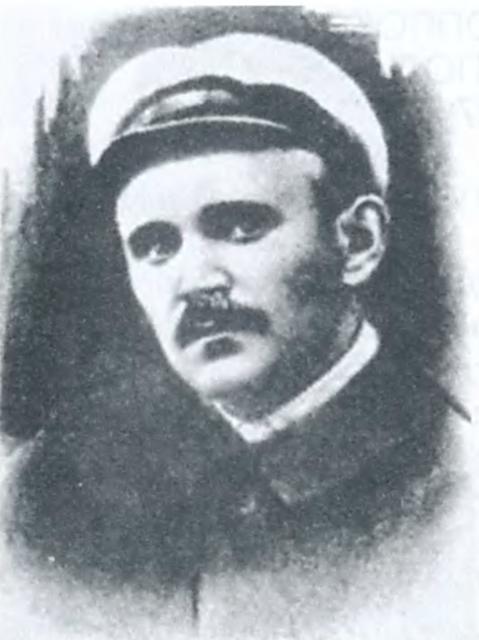
Born into a family of workers, Makarov began working at a stamping plant in 1908. In 1909, he joined the Russian Social Democratic Labour Party (RSDLP), aligning himself with the Bolshevik faction. He actively engaged in party organization in Yekaterinoslav.
Military Service and Revolutionary Activity
In 1916, Makarov was conscripted into the army but managed to escape and join a reserve regiment. However, he later secured a medical discharge due to health problems. After the February Revolution in 1917, Makarov was released from prison and became a member of the Yekaterinoslav Council and its executive committee. He also served as the provincial commissioner of police and later as deputy chairman of the executive committee of the Yekaterinoslav Railway.
Party Leadership and Government Roles
From February 1920, Makarov became editor of the newspaper "Zvezda" and head of the agitation and education department of the Political Directorate of the Railroad. In November 1920, he was appointed Second Secretary of the Central Committee of the Communist Party (Bolsheviks) of Ukraine (KP(b)U). From 1924 to 1930, Makarov was a member of the Central Control Commission of the All-Union Communist Party (Bolsheviks) (VKP(b)).
In 1924, he became Chairman of the Central Control Commission of the KP(b)U and People's Commissar of the Workers' and Peasants' Inspection of the Ukrainian SSR. He later served as Deputy People's Commissar of the Workers' and Peasants' Inspection of the USSR from 1925 to 1930 and a member of the Presidium of the Central Control Commission from 1926 to 1930.
Rise and Fall
In February 1930, Makarov was promoted to Deputy Chairman of the Council of People's Commissars of the Russian Soviet Federative Socialist Republic (RSFSR). In July 1930, he was elected to the Central Committee of the VKP(b). However, his political career came to an abrupt end when he was expelled from the Central Committee and arrested in 1937 on charges of "Ukrainian nationalism."
Trial and Execution
On October 29, 1937, Makarov was sentenced to death by the Military Collegium of the Supreme Court of the USSR. On October 30, 1937, he was executed by firing squad.
Posthumous Rehabilitation
Makarov's fate was later reversed during the Khrushchev Thaw. On March 17, 1956, he was posthumously rehabilitated, restoring his reputation and honor.