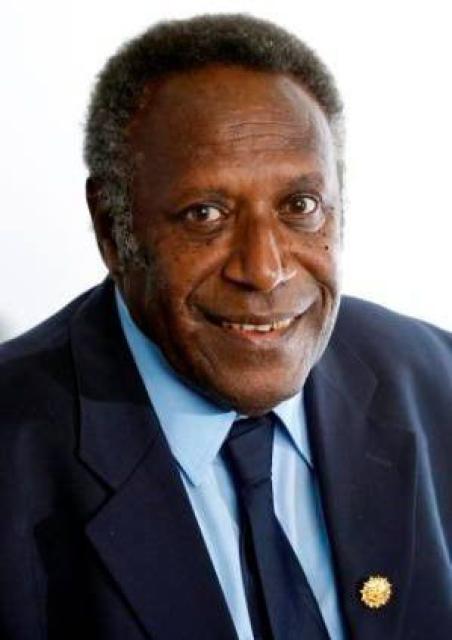
Donald Kalpokas
- Early Life and Education
- Teaching Career and Founding President
- Political Career Begins
- Vanuatu Independence and Foreign Minister
- Prime Minister and Coalition Governments
- Economic Achievements and Resignation
- Later Career
Early Life and Education
Donald Kalpokas was born on August 23, 1943, on Lelepa Island in the New Hebrides. He received his secondary education at Onesua School on Efate Island and King George VI School in Honiara. Afterwards, he studied at Teachers College in Auckland, followed by the University of the South Pacific in Suva.
Teaching Career and Founding President
From 1968 to 1976, Kalpokas served as a teacher under the British National Service. He later became a founding member and first president of the New Hebrides Teachers Association and the New Hebrides Cultural Association.
Political Career Begins
In 1975, Kalpokas was elected to the first House of Representatives. He served as Minister of Education in the National Unity Government and then in Walter Lini's government from 1978 to 1983.
Vanuatu Independence and Foreign Minister
Kalpokas played a key role in the Vanua'aku Party, advocating for independence from the Anglo-French condominium of the New Hebrides. After independence in 1980, he became the country's Minister of Foreign Affairs, but resigned within months. He was reappointed as Foreign Minister in 1987 and held the position for four years.
Prime Minister and Coalition Governments
In 1991, Kalpokas and members of the Vanua'aku Party secured a vote of no confidence against Prime Minister Walter Lini. Kalpokas became Prime Minister but lost the subsequent parliamentary elections to the Union of Moderate Parties.
In 1998, the Vanua'aku Party and Lini's National United Party formed a coalition government, with Kalpokas serving as Prime Minister and Foreign Minister from March 30, 1998. The coalition broke down within months, leading to a new coalition with the Union of Moderate Parties.
Economic Achievements and Resignation
Kalpokas's government privatized airports and introduced a 12.5% value-added tax. In November 1999, facing a possible vote of no confidence, Kalpokas resigned as Prime Minister.
Later Career
He left his position as Vanua'aku Party leader in 2001. In 2004, he ran for Prime Minister again but failed to secure enough support. In 2007, Kalpokas was appointed Permanent Representative of Vanuatu to the United Nations and Ambassador to the United States.