Edward (William) Elgar
 Great Britain
Biography of Edward William Elgar
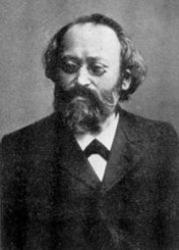
Edward William Elgar was an English composer and symphonist, widely regarded as the greatest composer in England after Henry Purcell (d. 1695). His father served as the organist of St. George's Catholic Church in Worcester and played the violin in the orchestra at the annual choral festivals. Elgar occasionally filled in for his father at the church and later in the festival orchestra. The future composer studied violin and experimented with composition. In 1883, his intermezzo was performed in Birmingham.
As a musician, Elgar was largely self-taught, and his taste was primarily influenced by the compositions of J.S. Bach, Haydn, Mozart, Meyerbeer, and old English church music. In literature, he favored Shakespeare and Voltaire. Elgar's characteristic late-romantic style, which instantly distinguishes his music, gradually developed. It was not until his forties that the composer gained recognition and confidence in his own abilities. His marriage to Caroline Alice Roberts in 1889 was a significant event on this path. All of his best works were created during their years together. Like the poet John Masefield, Elgar credited his wife as his source of inspiration. After her death in 1920, he was unable to produce anything outstanding.
Elgar gained recognition in the 1890s for his vocal compositions, but his true success came after 1899 when his orchestral music began to be performed. The Variations on an Original Theme, also known as the Enigma Variations, marked his breakthrough. His oratorio The Dream of Gerontius (1900) initially received recognition in Germany, but once English choirmasters familiarized themselves with the new musical language of the composition, it was also acclaimed in his homeland. Two more oratorios followed: The Apostles (1903) and The Kingdom (1906); his First Symphony in A-flat major (1908); Violin Concerto in B minor (1910); Second Symphony in E-flat major (1911); and his masterpiece, the symphonic study Falstaff (1913). These works, along with the Introduction and Allegro for Strings (1905) and the Cello Concerto in E minor (1919), fully demonstrated the composer's talent. Elgar was widely known among the general public for his magnificent march "Land of Hope and Glory" from the Pomp and Circumstance marches.
Although English music lovers initially hesitated to recognize Elgar, the situation changed over time. In 1904, the first Elgar Festival was held at Covent Garden Theatre. He was also elected as a member of the prestigious literary club, "The Athenaeum," and was knighted in July of the same year. Elgar received several honorary awards and the title of professor. During World War I, he composed a series of chamber instrumental works and a tragic cello concerto. Towards the end of his life, Elgar was appointed as the Master of King's Music and was granted the title of Baronet in 1931. Orchestral arrangements of Bach's organ fantasy and fugue in D minor (1921–1922) and Handel's Overture in D minor (1923), The Nursery Suite (1931), and a work for wind orchestra titled Severe Suite (1930) indicate that Elgar continued to work after 1920. To celebrate his 75th birthday, the BBC commissioned a new symphony from Elgar, but this composition, along with his planned opera The Spanish Lady, remained unfinished.