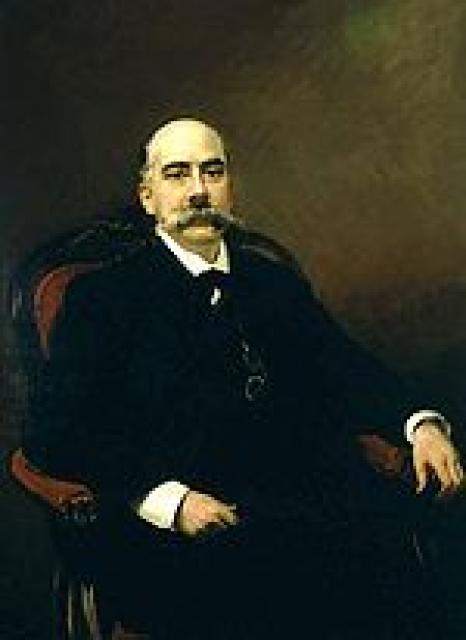
Emilio Castelar
 Spain
SpainIntroduction
Emilio Castelar y Ripoll was a Spanish political figure and the president of the First Spanish Republic. He was known for his oratory skills and literary works.
Early Life and Education
Emilio Castelar y Ripoll was born on September 7, 1832, in Cádiz, Spain. At the age of 7, he lost his father, who was actively involved in the progressive movement during the reign of Ferdinand VII. As a result, Castelar spent several years in exile in England. In 1848, he began studying law in Madrid but soon switched to the philosophical and literary school, where he obtained his doctorate in 1853.
Political Career
When the Spanish revolutionary movement began in 1854, Castelar represented the young intellectuals with republican views. Alongside his peers, he organized a meeting of like-minded individuals in the largest theater in the capital. It was during this event that Castelar delivered his first political speech, which quickly established him as a leading progressive politician during Queen Isabella's reign.
Castelar actively participated in politics, radical journalism, and literary and historical activities. He also taught history at the University of Madrid. In June 1866, he took part in the first uprising led by General Juan Prim. However, the revolt was suppressed by royal troops under the command of Marshals Leopoldo O'Donnell and Francisco Serrano. Castelar was sentenced to death by strangulation but managed to hide in his friend's house until he could escape to France. He spent two years in France until the success of the 1868 revolution allowed him to return and become a deputy in the Spanish parliament, representing Zaragoza. He also resumed teaching history at the University of Madrid.
Castelar gained recognition for his eloquence during his parliamentary speeches, and he led the republican minority advocating for the creation of a federal republic. This stance caused problems for influential military politicians like Prim, Serrano, and Juan Bautista Topete, who aimed to restore the monarchy with certain constitutional limitations. Castelar constantly criticized the government's plans, particularly regarding the choice of the Spanish throne. His relentless attacks contributed to the short-lived reign of King Amadeo I and his subsequent abdication.
Presidency and Later Years
The abdication of King Amadeo led to the proclamation of a federal republic. Despite significant opposition from monarchist-dominated Senate and Congress, Castelar and his fellow republicans, including Nicolás Salmerón, Estanislao Figueras, and Francisco Pi-i-Margall, successfully led the country as the government. The republic lasted from February 11, 1873, to January 3, 1874, representing the pinnacle of Castelar's political career. His moderate reformist initiatives during these 11 months gained approval from many Spaniards, even though he lost support from most of his former republican friends. As president, Castelar implemented reforms in the military, ended persecution against the church, and attempted to restore order to the depleted treasury after the civil wars. However, in January 1873, facing disapproval from the deputies in the Cortes, Castelar was forced to resign.
Despite his resignation, Castelar remained involved in Spanish political life and devoted himself to literary and journalistic work. He passed away on May 25, 1899, at the age of 66. His funeral in Madrid became a remarkable demonstration of sympathy and respect from all social classes and political parties.


