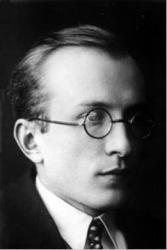
Erich Auerbach
 Germany
- Early Life and Education
- Military Service and Career Change
- Librarian and Translator
- Academic Career and "Mimesis"
- Exile in Turkey and the United States
- Legacy and Impact
Early Life and Education
Erich Auerbach was born into a Jewish family in Berlin, Germany. He studied in various German universities, including Berlin, Freiburg, Munich, and Heidelberg, where he earned a doctorate in law in 1913.
Military Service and Career Change
Auerbach served in World War I. After the war, he decided to change careers and completed a degree in philology at the University of Greifswald in 1921.
Librarian and Translator
From 1923 to 1929, Auerbach worked as an employee of the Prussian State Library in Berlin. During this time, he translated the works of Italian philosopher Giambattista Vico.
Academic Career and "Mimesis"
In 1929, Auerbach joined the Faculty of Philology at the University of Marburg. His doctoral dissertation on Dante was highly praised by philosopher Walter Benjamin. After the Nazi rise to power, Auerbach was dismissed from his teaching position in 1935.
Exile in Turkey and the United States
Auerbach emigrated to Turkey, where he taught at Istanbul University. In 1947, he moved to the United States, where he taught at the University of Pennsylvania, Princeton, and Yale.
His magnum opus, "Mimesis: The Representation of Reality in Western Literature," was written in Istanbul in 1946. It was translated into English in 1953 and became highly influential in the fields of literature, culture, and history.
Legacy and Impact
Auerbach's work had a profound impact on Western scholarship. His essays on European literature from Homer to Virginia Woolf became classics. The concept of "representation" was central to his research, and he explored issues such as audience reception and literary language.
Auerbach's work influenced scholars such as Carlo Ginzburg, George Steiner, Edward Said, Geoff Hartman, and Fredric Jameson, among others. He is widely regarded as one of the most important literary scholars of the 20th century.