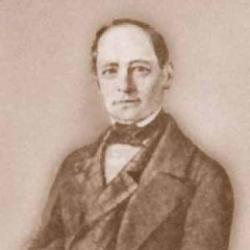
Ernst Zermelo
 Germany
Biography of Ernst Zermelo
Ernst Zermelo was a German mathematician who made significant contributions to set theory and the establishment of axiomatic foundations of mathematics. He was born into a family of a Berlin professor. In 1889, he completed his secondary education and enrolled at the University of Berlin. He later studied at the universities of Halle (Saxony-Anhalt) and Freiburg. In 1894, he defended his doctoral dissertation on variations calculus at the University of Berlin. He then worked as an assistant to Max Planck for several years. In 1897, he moved to Göttingen.
In 1910, Zermelo obtained a professorship at the University of Zurich, where he worked until 1916 when he temporarily suspended teaching due to deteriorating health. From 1926 to 1935, he worked at the University of Freiburg. After the collapse of the Nazi regime, he returned to the same professorship. He passed away in 1953 in Freiburg. Zermelo's main area of research was set theory. His first work on this topic appeared in 1902. In 1904, his most famous work was published, in which he proved that any set can be well-ordered (see Zermelo's theorem). However, the proof relied on the so-called axiom of choice, which was explicitly formulated for the first time in this article and is often called "Zermelo's axiom." The role of the axiom of choice in mathematics sparked active discussions among various mathematical schools, with different opinions ranging from full support to complete rejection. Concerns were also raised that the use of this axiom could lead to contradictions. Therefore, Zermelo closely examined the problem of constructing an axiomatic foundation for set theory (1905).
Zermelo published the first version of the axiomatic system for set theory in 1908, which included 7 axioms. Later, Adolf Fraenkel and Thoralf Skolem improved it by expanding it to 10 axioms, and this version, known as the Zermelo-Fraenkel system of axioms, is considered the foundation of modern mathematics.