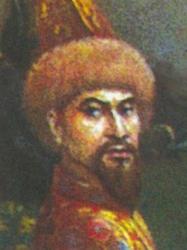
Esim
 Kazakhstan
- Biography of Esim Khan
- Early Life and Rise to Power
- Consolidation of Power and Military Victories
- Conflict with Tursun Sultan and Return to Power
- Leadership and Legacy
Biography of Esim Khan
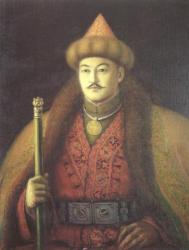
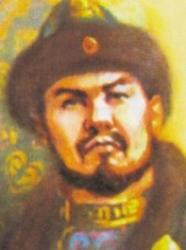
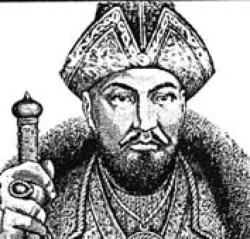
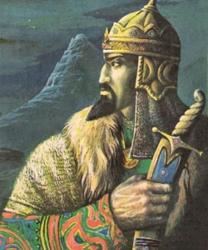
Esim Khan was a ruler from 1598 to 1628 and one of the prominent political figures of the late 16th and early 17th centuries. His main goal was to build a unified state with a centralized form of government, uniting all Kazakh tribes for the sake of common prosperity.
Early Life and Rise to Power
According to historical accounts, Esim was the son of Shigai Khan and stood out from other politicians in his ability to prioritize the interests of the state over personal ones. He was willing to sacrifice his reputation and authority for strategic goals, often employing compromise and surprising tactics.
In the late 16th century, the external political situation of the Kazakh Khanate became increasingly complicated. The struggle with the Bukhara khans for control over the Syr Darya cities, particularly Tashkent, continued with varying success. During the rule of Shigai Khan, trust and respect for the authority among the common people declined. Esim, known for his skillful politics, gained significant interest and was crowned as the Khan in autumn 1598.
Consolidation of Power and Military Victories
In 1611, Esim Khan gathered a 5,000-strong army and gained control over Tashkent, Turkistan, Sygnak, and Suzak. However, these successes were temporary. In 1613, despite resistance from the Bukhara khans, he seized Tashkent once again. The Bukhara khans were aware of the internal political situation in the Kazakh Khanate, characterized by separatist tendencies of certain sultans, such as Tursun Sultan. Tursun saw power as an end in itself, rather than a means to achieve certain goals. The Bukhara khan approved Tursun's usurpation of power, but it did not solve the complex problems facing the state.
Meanwhile, Esim found himself embroiled in political intrigues in the Chagatai court. He united some Kyrgyz tribes, formed an alliance with the rulers of Chalish and Turpan, and attempted to capture the city of Aksu from the ruler of Mongolia, Apakhan. Esim's advantage lay in his deep understanding of Eastern politics, allowing him to make calculated moves based on reason and cold calculation.
Conflict with Tursun Sultan and Return to Power
Despite Esim's efforts to improve relations with Tursun, conflicting interests eventually led to open conflict. Tursun suddenly launched a raid on Esim's camp in Turkistan while Esim was away leading a campaign against the restless Kalmaks. However, this campaign became Tursun's last, as he was eventually killed by Esim's supporters. Esim then ordered the execution of all representatives of the Kagan clan, who actively supported Tursun's usurpation of power. This mass extermination became one of the horrific episodes in the medieval history of the Kazakhs.
In return for Tursun's head, Esim received a document from Imamkuli stating that the administration of several Syr Darya cities was transferred to him. Esim reclaimed the title of the Khan of all Kazakhs.
Leadership and Legacy
Esim's return to power was an extraordinary event in the history of Kazakhstan. It is rare in the history of other Asian countries as well, where exiled leaders rarely regain leadership. This is because the principles of power organization in the East are different from those in the West. Esim's dominance was based on political values unique to Kazakh society.
Once back in power, Esim prioritized securing the country against Oirat raids, as many sultans underestimated their strength. Thanks to Esim's political foresight, the Kazakh tribes were able to launch a preemptive strike against the Oirats. Although the war with the Oirats had mixed success, Esim managed to subjugate them for a time. He realized that victory could only be achieved if all Kazakh tribes were united in their goals and actions. In the final years of his life, Esim continued to fight against separatist tendencies within the country and even created a code of laws known as "Esim Salgan EskI Zhol," which later formed the basis for Khan Tauke's "Seven Codes."
Esim Khan passed away in 1628 and was buried in Turkistan, where a mausoleum was built to honor his memory.