Kasym
 Kazakhstan
- The Biography of Kasym Khan
- Challenges from Muhammad Shaybani Khan
- Consolidation of Power
- Kasymovskiy Khanate
- Legacy and Death
The Biography of Kasym Khan
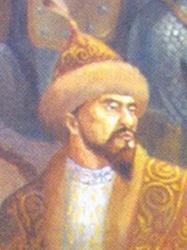
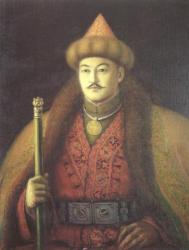
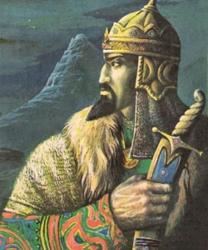
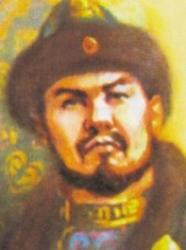
Kasym Khan (approximately born in 1445, died in 1518) was a Kazakh khan, known for his love and expertise in horses, military talent, and leadership abilities. He was the son of Zhani Beg Khan, one of the founders of the Kazakh Khanate. Unfortunately, very little information about Kasym Khan's internal and external policies and methods of governance has been preserved. However, during the early 16th century, Kasym Khan's personal power increased significantly.
Challenges from Muhammad Shaybani Khan
Upon ascending the khanate's throne, Kasym Khan faced strong opposition from the ruler of Maverannahr, Muhammad Shaybani Khan. Shaybani Khan utilized military and economic measures to prevent Kasym Khan's advancement into the Turkistan cities and to keep the Kazakhs out of Maverannahr. He also attempted to defend the Prisyrdariya cities in the southern part of Turkistan, turning them into a barrier separating Maverannahr from the nomadic regions of Eastern Desht-i-Kypchak. Kasym Khan, on the other hand, saw these Prisyrdariya cities as economic and military support for his rule over the nomadic population. He constantly troubled the Shaybanids in the border regions of Turkistan and Tashkent.
Consolidation of Power
Following Shaybani Khan's death in late 1510, and the subsequent struggle between the Shaybanids and Timurid Babur, the constant opponents of the Kazakhs became distracted from Turkistan. Kasym Khan took advantage of these circumstances to strengthen his power over Southern Kazakhstan. Soon, the largest city in Prisyrdariya, Sayram, came under the rule of the Kazakh Khan. Kasym Khan also attempted to seize Tashkent.
Kasymovskiy Khanate
After ascending to power in 1511, the Kazakh Khanate came to be known as the Kasymovskiy Khanate. In the second decade of the 16th century, Kasym Khan solidified his dominance over the vast steppe territories of Kazakhstan. Under his rule, the Kazakh Khanate experienced further development and increased political influence, transforming it into a strong and centralized state. According to historians, the territory of the khanate expanded to nearly coincide with the ethnic borders of the Kazakh population. The population of the Kazakh Khanate exceeded one million people. During Kasym Khan's reign, the Kazakh Khanate gained recognition and political power on the European stage. The first major state to establish diplomatic relations with the Kazakh Khanate was the Moscow State. It was during this time that the Kazakhs became known as a distinct ethnic community in Western Europe.
Legacy and Death
According to later authors such as Al-Ghaffari, Hasan Bek Rumlu, and others, Kasym Khan died in 930 AH, around 1523-1524 AD. According to the author of the early 17th century, Kydyrgali Kosyn Uly Zhaylary, Kasym Khan passed away in Saraychik, on the banks of the Ural River. He was buried in the ancient mausoleum of the Golden Horde khans. The names of two of Kasym Khan's sons are known - Mamash and Khaknazar. Both of them became khans.
Kasym Khan, as described by his contemporaries such as Binai, Ibn Ruzbihan, Babur, and Mirza Haydar, was known for his love and knowledge of horses, military talent, and the ability to lead. Kazakh folklore associates Kasym Khan with the creation of the "Kasym Khannyn Kaska Zholu" (The Pure Path of Khan Kasym), a set of laws that were never written down and have not survived to this day.