Tauke khan
 Kazakhstan
Biography of Tauke Khan
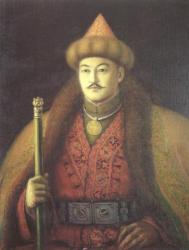
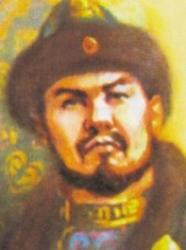
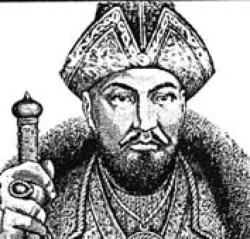
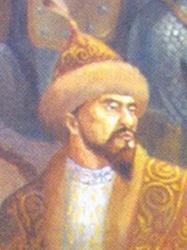
Tauke Khan was an outstanding statesman of the Kazakh Khanate during his rule from 1680 to 1715. His years of reign hold a special place in Kazakh history. It was a "Golden Age" marked by the end of destructive feuds, the relative dominance of laws, and the development of the economy and flourishing of trade. Tauke Khan is considered one of the most prominent statesmen of the Kazakh Khanate, who made an invaluable contribution to the national history. His name is associated with the strengthening of Kazakh statehood and the assertion of the Kazakh Khanate's foreign policy positions in the system of international relations in the Central Asian region.
Consolidation of Power
Tauke Khan's years of rule were a "Golden Age" in Kazakh history, characterized by the cessation of destructive feuds, the dominance of laws, and the development of the economy and trade. Tauke Khan is credited with being the founder of Kazakh customary law, as it was during his reign that the legal system of Kazakh society was finally formalized.
Tauke Khan's first significant change was in the system of power relations. He organized the activities of the biys (nobles), making the biy council meetings permanent and regular. Moreover, he established designated locations for these councils. The biy councils became an important government body, facilitating direct and indirect communication within the power structure. As a result, the authority of the government among the common people grew rapidly, allowing for dynamic development of the political situation in the country. Tauke Khan was the first to successfully organize tribal and clan relations, proclaiming consensus as the guiding principle.
Legal Reforms
Tauke Khan's reforms also affected the legal system. A code of laws called "Jeti Jargy" (Seven Ordinances) was developed with his direct participation. According to folklore, Tauke gathered the biys of three juzes (tribes) on the Kul-Tobe mountain and, based on the old ordinances of Kasym Khan and Esim Khan, they developed and adopted a new code of laws. Unfortunately, the original version of this legal document did not survive. Fragments of it are presented in the book of the renowned researcher A. Levshin, who recorded it from the mouths of the Kazakhs.
Alliance with Russia and Legacy
In 1697, Zevan-Rabtan became the supreme ruler of Jungaria, and from that moment, Kazakh-Oirat relations entered a new, even more intense period. The most significant military campaigns by the Jungars into Kazakh nomadic territories took place in 1711-1712, 1714, 1717, 1723, and 1725. Realizing the complex situation, Tauke Khan sought potential allies to create a military-political alliance against the Jungars. He decided to approach Russia for this purpose. However, Tauke Khan did not live long enough to fully realize his plans. He passed away in 1718.
After his death, internal conflicts within the Kazakh Khanate erupted with even greater force. Nevertheless, the people have preserved a special respect for Tauke Khan to this day. He is regarded as a person who united the Kazakhs, secured the state, and established the dominance of law and order.