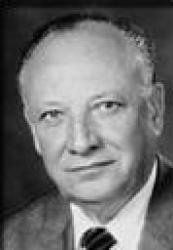
Evelyn Baring
 Great Britain
Evelyn Baring, later known as Lord Cromer, was a British imperial administrator whose long career took him from military service to the highest levels of colonial government. As Britain’s Agent and Consul-General in Egypt from 1883 to 1907, he wielded decisive influence over the country’s finances and administration. His tenure was associated with fiscal and institutional reforms, but also with a British occupation that restricted Egyptian self-government.
From the Army to India
Baring was born on 26 February 1841 at Cromer, Norfolk, into a branch of the prominent Baring family. He studied at the Royal Military Academy at Woolwich and joined the Royal Artillery in 1858. Early postings included service in the Ionian Islands and work connected to an inquiry into the 1865 uprising in Jamaica.
In 1872 his cousin, Lord Northbrook, became Viceroy of India and appointed Baring as his private secretary. Baring moved into financial administration, serving as commissioner of Egypt’s public debt from 1877 to 1879 and later as a member of the Indian government’s financial council. These posts gave him experience in the financial systems that would later define his influence in Egypt.
The British Agent in Egypt
Britain occupied Egypt in 1882 after a period of political upheaval and conflict. Baring arrived the following year as Agent and Consul-General. Although the country remained formally under the Ottoman Empire and had an Egyptian ruler, the British official exercised extensive authority over government policy. In practice, he became the dominant figure in the administration.
Baring prioritized balancing the budget, managing Egypt’s debt and reorganizing government services. His administration supported reforms in taxation, irrigation, the army and public works. These efforts improved some state finances and infrastructure, but they were carried out under foreign occupation and were shaped by British strategic and financial interests. Egyptian ministers and officials worked within a system in which the decisive power rested with the British administration.
A central figure in the British empire, Baring viewed administrative order and financial stability as prerequisites for progress. Critics, including Egyptian nationalists, saw a different reality: a foreign authority that limited political participation and postponed self-rule. The tension between modernization and imperial control remained central to his legacy.
Departure and Writings
Baring became Baron Cromer in 1892, Viscount in 1898 and Earl of Cromer in 1901. He returned to Britain in 1907, citing ill health, after more than two decades in Egypt. His departure came as Egyptian nationalist politics were gaining strength and as public criticism of British rule was growing.
In retirement he wrote extensively about Egypt and imperial government. His two-volume Modern Egypt, published in 1908, described the country’s recent history and his own administration. The book offered a detailed account of the system he had helped build, while reflecting the assumptions of a British official who believed imperial oversight was necessary.
Baring remained an influential public figure in Britain until his death in London on 29 January 1917. He is remembered as an able administrator and one of the most powerful British officials of his era, but also as a symbol of the limits placed on Egyptian sovereignty under colonial rule.