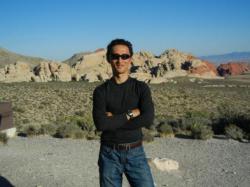
Evgeniy Pashkovskiy
 Russia
- Early Inspirations and the Influence of Art
- Choosing Science and the Influence of Russian and German Schools
- Challenges and Recognition in the Soviet Era
- Breaking Barriers: The Journey to America
- The Dynamism of Science and the Convergence of Disciplines
- The American Scientific Landscape and the Importance of Funding
- From Liquid Crystals to Biomedical Innovations
- The Significance of Professionalism and Teamwork
- Reflections and Similarities in Scientific Cultures
Eugene Pashkovsky: The Journey of a Russian Physicist to American Science
Early Inspirations and the Influence of Art
Eugene Pashkovsky, a renowned physicist, recalls his early passion for art. As a child, he immersed himself in art history at the Hermitage Museum, reading extensively and developing an appreciation for beauty and aesthetics. This foundation played a significant role in his scientific career, particularly in his understanding of the interconnectedness of disciplines.
Choosing Science and the Influence of Russian and German Schools
Despite his early love of art, Pashkovsky eventually pursued a degree in science at the Technological Institute in Leningrad. The institute, with its rich history of notable scientists, influenced his scientific perspective. He recognizes the distinctive contributions of different scientific traditions, such as the meticulousness of German science and the imaginative brilliance of French scientists. Russian science, he adds, has its unique qualities, blending elements of both German and French approaches.
Challenges and Recognition in the Soviet Era
Despite the outstanding theoretical research in Russian physics, Pashkovsky acknowledges the underfunding of experimental science and the political limitations imposed on scientific expression. Nevertheless, he praises the contributions of eminent scientists like Viktor Nikolaevich Tsvetkov, whose work on liquid crystals had a profound impact on his own research.
Breaking Barriers: The Journey to America
In the early 1990s, the fall of communism opened doors for scientists like Pashkovsky. He and his wife, Tamara, a fellow physicist, received invitations to present lectures in the United States and Italy. These opportunities marked the beginning of a new chapter in their scientific careers, as they were finally able to pursue their research abroad.
The Dynamism of Science and the Convergence of Disciplines
Pashkovsky draws parallels between science and art, particularly in the study of complex systems and the unpredictability of outcomes. He suggests that new physics, with its focus on the emergence and evolution of structures, bears striking similarities to the exploration of human destiny and the evolution of physical systems.
The American Scientific Landscape and the Importance of Funding
Pashkovsky observes that American science, while vibrant and well-funded in life sciences, faces challenges in securing support for fundamental research. He emphasizes that advancements in physics often have long-term benefits that may be less evident to investors.
From Liquid Crystals to Biomedical Innovations
After working on liquid crystals in Germany, Pashkovsky found a position in the United States writing a chapter on the topic for a scientific book. He subsequently accepted a position as a visiting professor at a university, where he taught polymer physics. Eventually, his research led him to a medical company in Boston, where he collaborated in the development of an innovative surgical adhesive.
The Significance of Professionalism and Teamwork
Pashkovsky stresses the importance of humility and self-presentation in job interviews. He emphasizes the need to convey one's value while remaining authentic. In American work environments, he finds that professionalism and teamwork are highly valued, as colleagues strive for the success of their organization.
Reflections and Similarities in Scientific Cultures
Throughout his journey, Pashkovsky has witnessed the diversity and interconnectedness of scientific cultures. While different nations may approach science with distinct methodologies and funding structures, he believes that genuine science transcends national boundaries and unites individuals through their shared passion for intellectual exploration and the pursuit of knowledge.