Fidel Castro
 Cuba
Cuba- Biography of Fidel Alejandro Castro Ruz
- Childhood and Youth
- Politics
- Chairman of the Council of Ministers of Cuba
- Assassination Attempts and Health
- Personal Life
- Death
Biography of Fidel Alejandro Castro Ruz
Fidel Alejandro Castro Ruz, the Cuban dictator, is known worldwide as "El Comandante" and the long-standing Cuban leader who ruled the country for over half a century. There are many legends surrounding his activities and life, often contradicting each other. It is difficult to give a definite characterization of this "great and terrible" political figure, as one part of the global community sees him as a popular ruler, while the other considers him the harshest dictator in history. Fidel Castro's biography is filled with various events - he survived over 600 assassination attempts, became the leader of the Cuban revolution, and was the most feared enemy of the United States, entering into a nuclear and economic alliance with the USSR.
Childhood and Youth
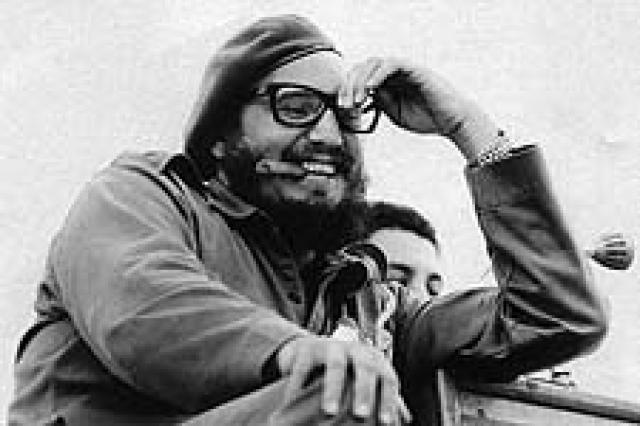
Fidel Castro was born on August 13, 1926, in the small provincial town of Birán in Cuba, in the family of a small landowner and a cook. His parents were uneducated, so they tried to provide their children with the best education possible. Considering that Fidel had displayed a phenomenal memory from an early age, he became the top student in his school. In addition to his ability to learn, Castro was known for his ambitious and determined character, displaying a revolutionary spirit. At the age of 13, he participated in a workers' uprising on his father's plantation, where he held leadership positions. In 1941, the future Cuban leader graduated from high school with honors and enrolled in a privileged college, where he was remembered as a vain student and a participant in all fights. After college, Fidel Castro became a student at the Law Faculty at the University of Havana. During his student years, he was particularly interested in revolutionary books, which instilled a revolutionary spirit in him. At that time, he had little sympathy for the communists but was willing to join their ranks if they "made him a Stalin." In 1950, Fidel Castro graduated with a law degree and opened a private practice, providing legal assistance to the poor. The future "Comandante" became a people's advocate, offering free legal aid to the population and gaining considerable support in society.
Politics
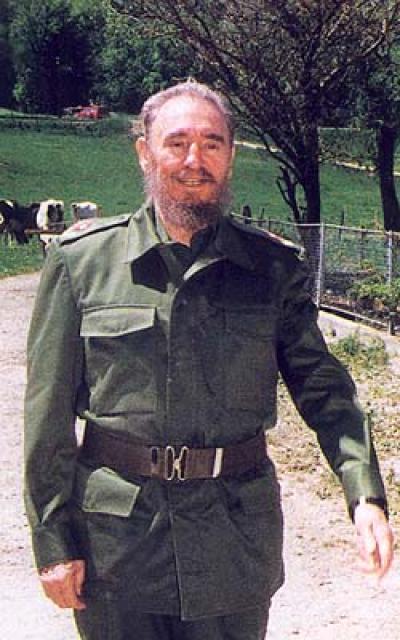
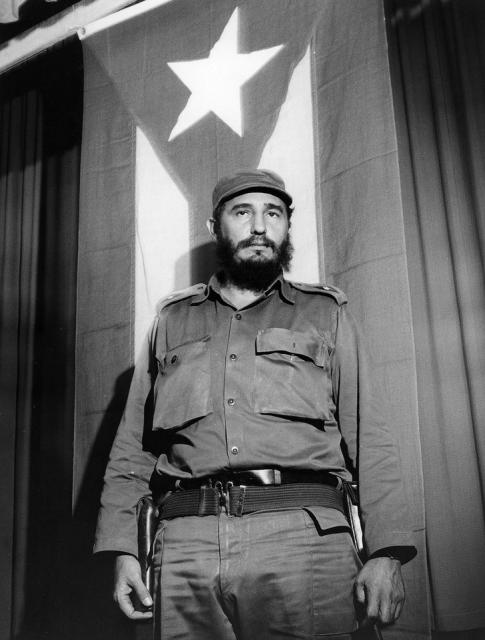
The beginning of Fidel Castro's political career had a revolutionary character. He first became a member of the Cuban People's Party and attempted to enter parliament from its ranks. However, his first attempt failed, as his candidacy was not approved due to his radicalism. Castro then decided to take more desperate steps and became the leader of the fighters against the dictatorship. In 1953, he organized a conspiracy against the then Cuban leader, Fulgencio Batista. This attempt to seize power also failed, as many of Castro's comrades were killed as a result of the conspiracy, and the revolutionary himself was imprisoned for 15 years. Two years later, the future leader of Cuba fell under a general amnesty and was released from prison after spending 22 months there. The freed prisoner immediately left the country and moved to Mexico, where he organized the revolutionary "Movement of July 26" in memory of the uprising against Batista. The movement included many famous revolutionaries of the time, such as Ernesto "Che" Guevara and Fidel Castro's brother, Raul Castro. Fidel Castro's return to his homeland became fateful for both him and the entire Cuban people - with the army of rebels, he managed to capture Havana and overthrow the regime of Batista, which allowed him to become the commander-in-chief of the Cuban troops and later take the post of Prime Minister of the country.
Chairman of the Council of Ministers of Cuba
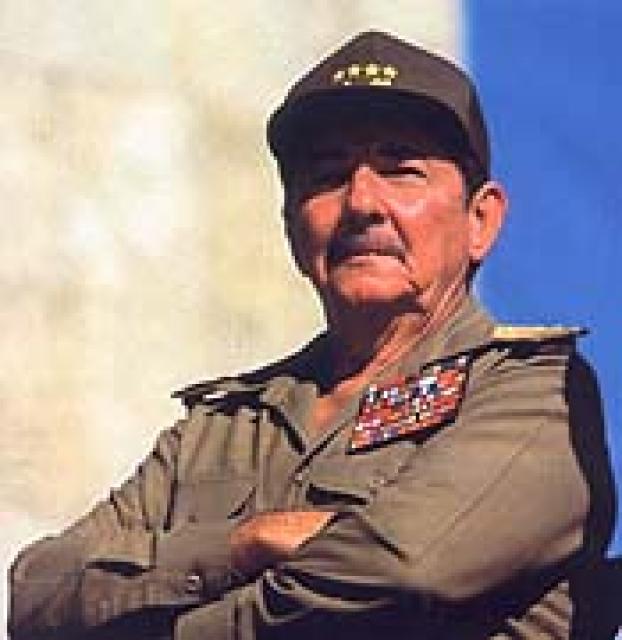
During his nearly 20 years as the head of the Cuban government, Fidel Castro completely transformed the state - the country quickly prospered and experienced an unprecedented economic boom. The new leader of Cuba paid special attention to the social sphere, making healthcare free for the population and raising the level of education to 98%. At the same time, private companies were nationalized, and a "friendship" with the USSR was established. In 1962, Soviet nuclear missiles were placed on the island, worsening relations between the US and Cuba. Hostilities with the West led to the Cuban Missile Crisis, causing many of Castro's comrades to flee the country and side with the Americans. Despite this, the Cuban leader continued to work towards overthrowing global capitalism, supporting foreign revolutionary movements in Angola, Afghanistan, South Yemen, Ethiopia, Syria, Algeria, Nicaragua, Libya, and other Third World countries. Economic growth and stability in Cuba came to a halt in the early 1980s when the USSR stopped providing financial support to the country. This led to an economic crisis, making Cuba the poorest country in the world. Against this backdrop, people started to try to leave the country and immigrate to the US by any means possible, while opposition groups in Cuba began organizing movements to overthrow the Castro regime. In 2006, due to his deteriorating health, Fidel Castro was forced to pass his powers to his younger brother, Raul, who became the full-fledged ruler of Cuba in 2008, as Fidel Castro was physically unable to govern the country and lead the Cuban army.
Assassination Attempts and Health
Assassination attempts on Fidel Castro's life are the most widely discussed chapter in his biography. It is known that during his rule over Cuba and collaboration with the USSR, the CIA made about 600 attempts to assassinate the Cuban leader. All of them were canceled for unknown reasons at the last moment and were completely foiled by the island's special agents. Castro was targeted for assassination during underwater hunting, with a miniature pistol embedded in a reporter's camera, and by poisoning him with a deadly toxin that was soaked into "Castro" cigars. In 2006, Fidel Castro's health significantly deteriorated and became a state secret on the island. Despite this, some of Castro's illnesses became public knowledge and gained attention after the declassification of a report by the CIA. It is known that Castro began suffering from Parkinson's disease in 1998, which made him a paranoid jealous person. A local doctor who escaped from Cuba revealed that the politician was also suffering from rectal cancer and underwent surgery in 1989 due to a cerebral hemorrhage. With such information, the famous Cuban "comandante" was "buried" several times in the media, but he always suddenly appeared in public and denied the mass rumors of his death. In 2014, Fidel Castro met with the Russian Foreign Minister Sergey Lavrov. After the meeting with the Cuban leader, the Russian Foreign Minister stated that he was undoubtedly weak, but his eyes were full of life and readiness for new revolutionary achievements.
Personal Life
Fidel Castro's personal life, like his health, is a closed and secret topic in society. It is known that he had three truly loved women in his life, with whom he had seven children, of whom only one son is legitimate. His first wife, Mirta Diaz-Balart, was the daughter of a Cuban government minister during Batista's regime. She gave birth to Castro's only official heir, Fidelito, who was married to a Russian woman for some time. Fidel Castro's second wife was the legendary Havana beauty of the 1950s, Natalia "Naty" Revuelta, who gave birth to their daughter, Alina. Castro's daughter fled from Cuba to the United States with a fake Spanish passport when she was young. According to Alina's recollections, Castro has at least five more children from his beloved woman named Delia Soto. The Cuban revolutionary's third wife, Celia Sanchez, was his assistant for many years but committed suicide in 1985.
Death
As of 2005, Fidel Castro's net worth was estimated to be $550 million, and a year later, it increased to nearly a billion. According to Forbes magazine, he became one of the richest people on the planet. However, the Cuban leader denies his income from state-owned enterprises but enjoys luxury, as evidenced by his numerous yachts, residences, and a thousand-strong security detail. The extravagant politician does not lavish special attention on his children - he only provided them with a food ration and security.

On November 25, 2016, at 22:29 (06:29 Moscow time, November 26), Fidel Castro passed away. The Cuban revolutionary left this life after a prolonged illness. According to his wishes, Castro's body was cremated.