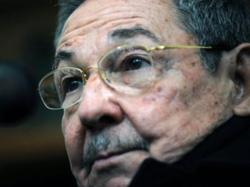
Raul Castro
 Cuba
CubaBiography of Raul Castro
Raul Modesto Castro Ruz was born on June 3, 1931, in Biran, a town in the Cuban province of Oriente. He was the fourth of seven children and the younger brother of Fidel Castro. Raul received his secondary education at Jesuit colleges in Santiago de Cuba and Havana. He then attended the University of Havana, where he studied public administration. During his student years, Raul became a communist activist and joined the Union of Socialist Youth.

Raul and his brother Fidel participated in underground activities against the dictatorship of Fulgencio Batista. In July 1953, Fidel led a failed attempt to seize control of the Moncada Barracks in Santiago, and both brothers were arrested and sentenced to long prison terms. They were released in 1955 and went into exile in Mexico, where Fidel led the "26th of July Movement" named after the failed uprising in 1953. In Mexico, Raul met Argentine revolutionary Ernesto "Che" Guevara, whom he brought into his brother's movement.

In December 1956, Raul, Fidel, and Che, along with other revolutionaries, sailed to Cuba on the yacht Granma. Most of them were captured, but Raul and a few others managed to escape and establish a guerrilla movement in the Sierra Maestra mountains. Raul served as one of the commanders of the revolutionary forces, and under his leadership, around four thousand rebels fought against the Batista regime.

On January 1, 1959, the rebels took control of Havana, and Batista's regime fell. Raul became the head of the administration of the Oriente province. In the early years after the revolution, Fidel kept Raul at a distance from the central government because of his radical political views. However, Raul played a crucial role in carrying out his brother's orders and suppressing opposition. It is believed that Raul influenced Fidel's shift towards socialism and alignment with the Soviet Union.

In February 1959, Fidel Castro became the head of the government, and Raul became the Commander-in-Chief of the Cuban Armed Forces. He held the position of Minister of Revolutionary Armed Forces until 2008, making him the longest-serving defense minister in history. Raul also held various other positions within the Communist Party of Cuba and the Cuban government, including being a member of the Central Committee, the Politburo, and the second secretary of the Communist Party.

After the collapse of the socialist bloc and the disappearance of the Soviet Union in 1991, Cuba faced a severe economic crisis. Raul and the military leadership played a key role in introducing economic reforms, such as allowing foreign investments and implementing market-oriented policies. Raul's influence on the country's financial policies grew during this period.
In October 1997, Fidel Castro publicly named Raul as his potential successor. Raul assumed temporary leadership in 2006 when Fidel underwent surgery and later officially became the President of the State Council in 2008. He continued to hold significant power in the Cuban government and led the country through economic and political challenges.
Raul Castro's presidency was marked by a gradual opening of the economy and the normalization of relations with the United States. In 2016, he announced that he would step down as president in 2018, making way for a new generation of leaders. Despite not having the charisma and public presence of his brother Fidel, Raul proved to be an effective leader during his tenure.
Raul Castro's contributions to the Cuban revolution and his long-standing role in the country's leadership make him a significant figure in Cuban history.