Friedrich Adler
 Austria
- Friedrich Adler: Austrian Socialist and Revolutionary
- Early Life and Influences
- Political Activism and Anti-War Stance
- Assassination of Count Karl von Stürgkh
- Imprisonment and Release
- International Leadership and Anti-Communism
- Exile and Legacy
- Recognition in Moscow
Friedrich Adler: Austrian Socialist and Revolutionary
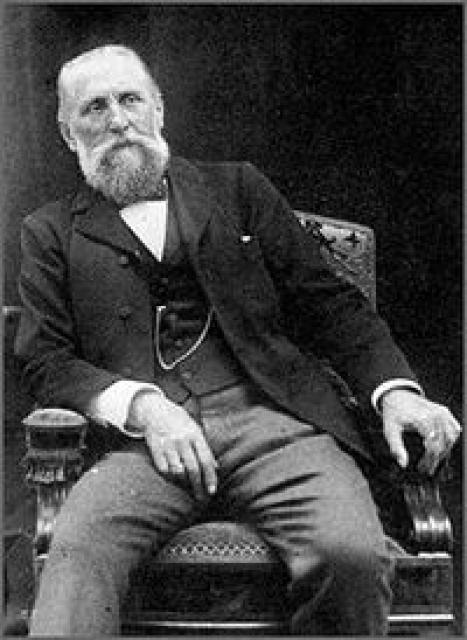
Friedrich Adler, born on July 9, 1879, in Vienna, was a prominent figure in the history of Austrian socialism and revolutionary politics.
Early Life and Influences
Adler's father, Victor Adler, was a prominent Austrian politician and leader of the Social Democratic Party. Raised in a politically active household, Adler studied in Zurich and became a member of the Austrian Social Democratic Party in 1907. He developed a close friendship with Albert Einstein.
Political Activism and Anti-War Stance
In 1911, Adler became actively involved in politics, aligning himself with the left-wing of the Austrian Social Democrats. He fiercely opposed Austria-Hungary's participation in World War I, going against the official party line.
Assassination of Count Karl von Stürgkh
Adler's opposition to the war reached its peak on October 21, 1916, when he assassinated Count Karl von Stürgkh, the Prime Minister of Austria-Hungary. The assassination sent shockwaves throughout Europe and led to Adler's arrest and subsequent death sentence.
Imprisonment and Release
After the 1918 revolution, Adler's death sentence was commuted to 18 years in prison. He was released and became a prominent leader in the workers' councils and the National Council of Austria.
International Leadership and Anti-Communism
Adler played a key role in the Two-and-a-Half International (1921-1923) and later the Socialist Workers' International, where he served as Secretary of the Executive Committee for over 15 years (1923-1940). He actively opposed the communist movement and rejected efforts to unite with them.
Exile and Legacy
With the outbreak of World War II in 1940, Adler fled to the United States. After the war, he returned to Europe in 1946 and settled in Zurich, where he spent his final years editing his father's correspondence. He passed away on January 2, 1960.
Recognition in Moscow
In Moscow, a street was renamed in Adler's honor in 1918. However, following his denunciation of communism, the street was later renamed after Leonid Krasin in 1931. In Petrograd, another street bore Adler's name from 1918 to 1921.