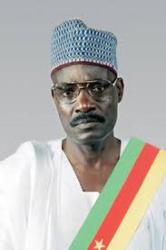
Friedrich Dickel
 Germany
- Early Life and Activism
- Forced Underground and Resistance
- International Brigade and Espionage
- Imprisonment and Liberation
- Leadership in the GDR Security Forces
- Deputy Minister of Defense and Security
- Influential Figure in the GDR
- Retirement and Legacy
Early Life and Activism
Born into a working-class family in Germany, he completed his elementary education in 1928. As a young man, he became actively involved in the communist and anti-fascist movements, joining the Communist Youth Union in 1928 and the Communist Party in 1931. He also played a key role in the Red Aid and the Red Front Fighters' League, both strongly influenced by communists.
Forced Underground and Resistance
With the rise of Adolf Hitler to power, he was forced into hiding as an active communist. Arrested twice but never identified, he fled the country in 1935 due to the threat of further arrest. During this period, he resided in France and the Netherlands.
International Brigade and Espionage
Shortly after the outbreak of the Spanish Civil War, he traveled to Spain and joined the Ernst Thälmann International Brigade, fighting alongside the Republican government. He commanded a company and was later transferred to the Soviet Union, where he trained at a reconnaissance school. He conducted espionage operations in Finland and Japanese-occupied China.
Imprisonment and Liberation
In 1943, he was captured in Shanghai by the Japanese and sentenced to prison. With the surrender of Japan in 1945, he was released at the request of the Soviet Union. In 1946, he returned to Germany to work in the Soviet occupation zone, joining the Socialist Unity Party of Germany.
Leadership in the GDR Security Forces
He rose through the ranks of the People's Police in Leipzig, graduating from the People's Police Academy and becoming director of the People's Police Political School in Berlin. From 1953, he commanded the Political Directorate of the People's Police. In 1956, he transferred to the National People's Army and served as chairman of its sports association.
Deputy Minister of Defense and Security
After completing advanced military training in the Soviet Union, he became Deputy Minister of National Defense and the GDR's representative to the Soviet Army's headquarters in Germany. In 1963, he was appointed Minister of the Interior, a position he held for over 25 years.
Influential Figure in the GDR
As Minister of the Interior, he became one of the most influential figures in the GDR's leadership, also serving as Chief of the People's Police and Civil Defense Chief. He was a member of the SED Central Committee from 1967 to 1989 and a deputy in the GDR's People's Chamber until 1990.
Retirement and Legacy
He retired in 1989 and was buried in Berlin's Grunewald Cemetery. His numerous awards included two gold medals as Hero of the GDR, three Orders of Karl Marx, and the Order of Lenin from the Soviet Union.