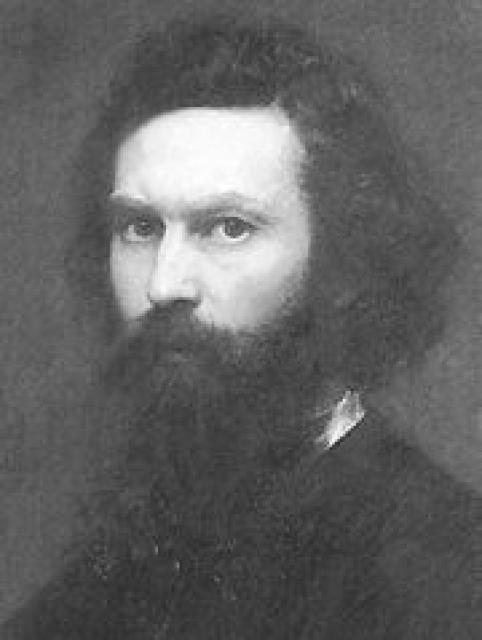
Friedrich Wilhelm Christian Theodor Kaulbach
 Germany
- Biography of Friedrich Wilhelm Christian Theodor Kaulbach
- Early Works and Independent Career
- Parisian Influences and Royal Commissions
- Success and Recognition
- Legacy and Accolades
Biography of Friedrich Wilhelm Christian Theodor Kaulbach
German artist Friedrich Kaulbach was born on June 2, 1822, in Bad Arolsen, Germany. He was the nephew and student of Wilhelm von Kaulbach, the founder of the renowned Kaulbach artistic dynasty. Friedrich Kaulbach began his artistic career under the guidance of his uncle in 1839.
Early Works and Independent Career
In 1844, Friedrich Kaulbach embarked on a trip to Venice, where he painted his first independent work, "Adam and Eve Finding the Body of Abel." This marked the beginning of his solo artistic journey. Shortly after, Kaulbach was offered a professorship at the Academy of Fine Arts in Munich, but he declined the position.
Parisian Influences and Royal Commissions
In 1850, Kaulbach traveled to Paris, where he painted several historical canvases and commissioned portraits. It was during this time that he received a significant commission from Bavarian King Maximilian for a painting titled "The Coronation of Charlemagne" for the Maximilianeum. The work was completed in 1861 and showcased Kaulbach's skill in historical representation.
Success and Recognition
In 1856, Kaulbach achieved great success when he painted portraits of King George V, earning him the title of court artist and a professorship at the University of Hanover. His portraits gained popularity among the local aristocracy. As a token of appreciation, the king gifted Kaulbach a workshop and a house designed by Christian Heinrich Tramm, which was constructed between 1857 and 1860.
Legacy and Accolades
Kaulbach's daughter, Isidora Kaulbach, a renowned writer, fondly recalled her childhood in her memoirs, where esteemed guests such as Johannes Brahms, Clara Schumann, Franz Liszt, Joseph Joachim, Ernst von Wildenbruch, and Anton Rubinstein frequented their home.
Kaulbach's numerous portraits, including those of Empress Elisabeth of Austria, Crown Prince Albert of Germany, and Count and Countess Stolberg, were characterized by their intricate details, theatricality, light-hearted elegance, and lack of vibrant colors—representative of the artistic style of the time. Friedrich Kaulbach was honored with a gold medal from the Academy of Fine Arts in Berlin and was accepted as a full member.
In addition, Kaulbach received a medal at the World Exhibition held in Vienna in 1873. He passed away on January 7, 1903, in Munich, leaving behind a legacy of artistic achievements. His son, Friedrich August, also followed in his footsteps and became an artist.


