Georges Thill
 France
Biography of Georges Thill
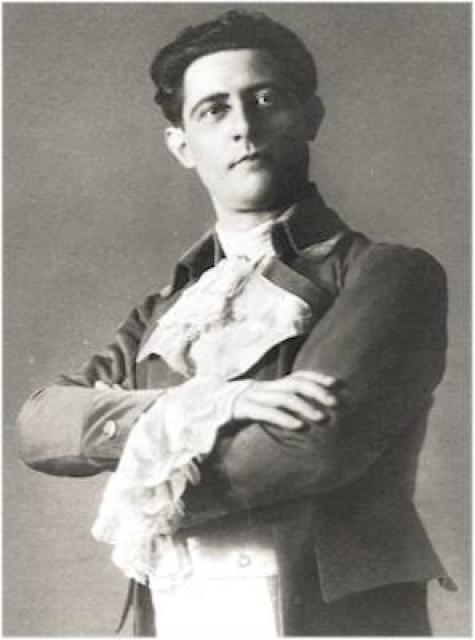
Georges Thill was a French opera singer, often considered the greatest lyric-dramatic tenor of his country, whose career spanned from 1924 to 1953, with his peak of popularity in the 1930s. In 1934, he was awarded the Knight's Cross of the Legion of Honour. He was born on December 14, 1897, into a family of a Parisian publisher. From an early age, Georges loved to sing and had a powerful voice. He would sing upon the request of his family, friends, and colleagues at the stock exchange where he worked since 1915, but he never thought about pursuing a career as a professional singer. Later, Thill mentioned that he memorized two arias by Enrico Caruso from "Tosca" and "I Pagliacci" using a musical automaton, even though the arias were played at the wrong speed, making his voice sound too high.
Early Career and Training
In 1916, during World War I, like many of his peers, Thill enlisted in the military and often sang for his comrades. After the war, his uncle convinced him to audition at the Paris Conservatoire, where he was accepted in November 1918. The first two years from 1919 to 1920 were full of difficulties and disappointments as he struggled to find his voice under the tutelage of bass André Gresse. In January 1921, upon the advice of a friend, Thill became a student of the famous Italian tenor Fernando De Lucia, a great specialist in the bel canto repertoire. De Lucia quickly discovered his strengths and weaknesses, teaching Thill breath control, remarkable clarity of diction, exceptional legato, and strengthening his lower range, which lacked stability. Thill gratefully remembered his two years with De Lucia, allowing him to effortlessly perform challenging dramatic roles.

Operatic Career
In the beginning of 1924, Thill decided to make his debut as Nicias in Jules Massenet's "Thaïs" at the Paris Opera instead of Milan's La Scala, which seemed more logical and reasonable due to the peculiarities of his vocal style and his teacher's preferences. This decision had a significant impact on his entire career, turning Thill into an undisputed specialist in French opera, whose golden age was coming to an end, and a renowned French singer with international fame. From the very beginning and throughout the next decades, his performance schedule was extremely demanding. Thill regularly appeared on the stages of the Paris Opera and Opéra-Comique, toured extensively in Europe and South America, and gained recognition from audiences and critics at La Scala, Rome Opera, Verona Arena, Vienna State Opera, Teatro Colón in Buenos Aires, and the Royal Opera House in Covent Garden, among many others. He also performed in the Metropolitan Opera in New York, giving 14 performances and portraying 7 roles in two seasons from 1931 to 1932. However, he found it difficult in America due to significant cultural differences, and he never returned there, preferring to tour in Canada instead.
Later Years and Legacy
In the 1940s, signs of age-related changes in Thill's voice started to appear. In 1946, he practically concluded his performing career with a grand international tour. Over the next 10 years, Thill rarely performed and only in France. His farewell concert took place in 1956 at the Théâtre du Châtelet. He passed away on October 17, 1984, in Draguignan, Var, a town located in the mountains in the southeast of France. Thill had an extensive repertoire with a focus on French and Italian opera, ranging from Gluck to Puccini, performing works by Gounod, Massenet, Berlioz, Meyerbeer, Verdi, Wagner, Leoncavallo, Bizet, Saint-Saëns, Rossini, and Rimsky-Korsakov, among others. He often gave concerts, not only performing serious music but also songs and arias from operettas. He appeared on the radio and had numerous recordings, allowing future generations to enjoy the brilliant sound of his heroic, smooth, and elegant voice, impeccable taste, perfect phrasing, and precise diction. Thill also appeared in several short and feature films, including "Louise" in 1939 based on Gustave Charpentier's opera. In his personal life, Thill was friendly, elegant, and exceptionally handsome with a great physique. He enjoyed life and his profession. He was admired passionately by women, to the extent that young female fans from a religious institution presented him a cross made from their own hair. The press always followed him closely, even during his retirement. Such popularity touched and amazed Thill until the end of his life.