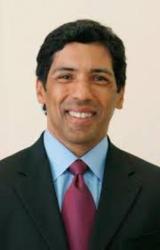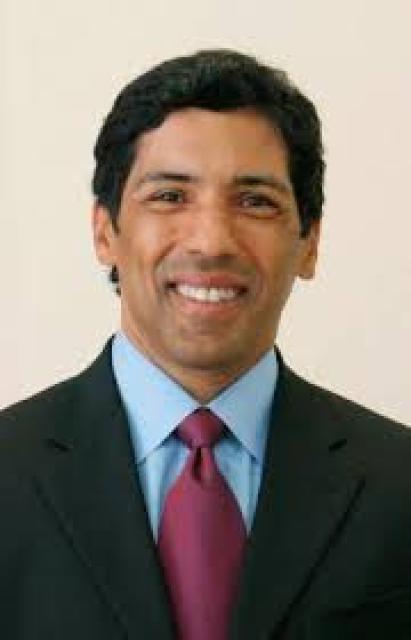
Hansen Clarke
 USA
- Detroit roots and a difficult youth
- Art, law and Michigan politics
- A surprise victory for Congress
- The artist beyond the office
- Legacy
Hansen Clarke’s route from Detroit to Congress ran through an art scholarship, law school, years in Michigan politics and a campaign that overturned a seven-term incumbent. A former Michigan state representative and senator, he served one term in the U.S. House from 2011 to 2013. His unusual mix of artistic training and legislative work, along with a childhood marked by loss and financial hardship, shaped the story he told voters about public service and opportunity.
Detroit roots and a difficult youth
Clarke was born Molik Hashim in Detroit on March 2, 1957. His mother, Thelma Clarke, was African American, and his father, Mozaffar Ali Hashim, was a Bangladeshi immigrant who worked in a Detroit auto factory. His father died when Clarke was eight, leaving his mother to raise him on her wages as a school crossing guard.
A gifted artist, Clarke earned a place at Phillips Exeter Academy in New Hampshire at age fourteen through a program that helped young students of color prepare for college. The wealth and culture shock proved difficult, and he returned to Detroit after two years. He later completed his secondary education at Governor Dummer Academy in Massachusetts.
Clarke won an art scholarship to Cornell University, but his mother died during his freshman year. Grief disrupted his studies, and after losing the scholarship he returned to Detroit, where he drove a taxi and at one point relied on public assistance. In 1978, he changed his name to Hansen Clarke in honor of his mother. With support from his godmother, friends and a professor, he eventually returned to Cornell and graduated in 1984 with a bachelor’s degree in fine arts. He went on to earn a law degree from Georgetown University in 1987.
Art, law and Michigan politics
Clarke’s interest in public life began during college, where student government helped draw him toward politics. After law school, he worked on Richard Gephardt’s 1988 presidential campaign and in the office of Detroit-area Congressman John Conyers Jr. He also worked in county government and practiced law.
He entered the Michigan House of Representatives in 1991, lost reelection the following year, then returned to the chamber in 1999. In 2003 he moved to the state Senate, where he served through 2010. The intervening years included setbacks: he lost a Detroit City Council race in 2001 and finished fourth in the 2005 Democratic primary for mayor. His mayoral campaign called for dismantling what he described as a patronage system at City Hall.
As a state legislator, Clarke focused on economic challenges facing Detroit and its residents. During the housing crisis, he introduced legislation intended to protect homeowners in foreclosure from eviction. He also pressed for changes to the financially troubled Detroit public-school system. His priorities reflected a recurring theme in his politics: policies that could aid disadvantaged residents while creating stronger prospects for local employers and businesses.
A surprise victory for Congress
In 2010, as term limits were ending his state Senate service, Clarke challenged Democratic Representative Carolyn Cheeks Kilpatrick. His grassroots campaign emphasized his Detroit roots, personal hardships and proposals to address unemployment and foreclosures. He defeated Kilpatrick in the Democratic primary, winning 47 percent of the vote, then captured the general election decisively in the heavily Democratic district.
Clarke represented Michigan’s 13th Congressional District from January 2011 to January 2013. In the House, he served on the Homeland Security and Science, Space, and Technology committees. He introduced proposals aimed at economic development in Detroit, including a plan for federal tax revenue collected from the city to be returned over five years, as well as bills relating to student loans, auto insurance rates and industrial fees. He also secured amendments directing funds toward nutrition programs and assistance for veterans experiencing homelessness. Many of his largest plans did not advance beyond the proposal stage during his single term.
Redistricting changed the political landscape after the 2010 census. In 2012, Clarke chose to run in the newly drawn 14th District, which stretched from Detroit toward Pontiac and also included incumbent Democrat Gary Peters. The campaign became tense. After reports about the race recorded on his mother’s death certificate, Clarke declined to participate in debates and accused his opponents of using racist rhetoric and attacking his deceased parents. He lost the Democratic primary to Peters.
He returned to the ballot in 2014, running again for the 14th District after Peters sought a Senate seat. Clarke lost the Democratic nomination to Brenda Lawrence. The election marked the end of his efforts to return to Congress.
The artist beyond the office
For Clarke, painting remained more than a youthful interest. He has described art as a source of focus and openness that helped him serve in public office. His congressional schedule limited his time for it, but he continued to make small watercolor and ink works. He also spoke of the visual arts as a potential source of educational and economic development for Detroit.
After leaving Congress, Clarke taught as an adjunct professor at the University of Detroit Mercy School of Law. His life in public office had been unconventional from the beginning: an artist trained at Cornell and a Georgetown lawyer whose political instincts were rooted in Detroit’s neighborhoods.
Legacy
Clarke’s political career is remembered for its combination of local persistence and national ambition. He won office after early electoral defeats, served in both chambers of Michigan’s legislature and made a brief mark in Congress with a broad agenda centered on Detroit’s recovery. His personal history—losing both parents young, returning to school after hardship and keeping art alongside politics—became central to his appeal as a candidate and to the way he explained his commitment to public service.