Ho Chi Minh
 Vietnam
Biography of Ho Chi Minh
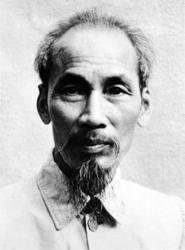
Ho Chi Minh, born on May 19, 1890, in the province of Nghean in Central Vietnam, was a Vietnamese political leader and the first president of the Democratic Republic of Vietnam (or North Vietnam). His real name was Nguyen Tat Thanh, and he had many party pseudonyms, one of which was Ho Chi Minh. He studied at the National College in Hue and later worked as a teacher, teaching French and Vietnamese languages.

In 1911, Ho Chi Minh traveled to Europe and spent the next few years living in England and the United States. In 1919, he settled in Paris. It was in France that Ho Chi Minh became involved in politics, actively participating in the activities of left-wing French organizations, attending their meetings and rallies, writing articles, and gaining recognition in political circles. Ho Chi Minh played a role in the establishment of the French Communist Party and later the Intercolonial Union.
In 1923, he traveled to Moscow, where he studied party organization and solidified his position as a communist leader. From 1925 to 1927, Ho Chi Minh worked as a translator for the Soviet consulate in Canton, China. It was during this period that he organized the Revolutionary Youth Association of Vietnam. To avoid arrest, he lived in Cambodia for a while and worked underground in Thailand. By that time, there were already separate communist groups operating in Indochina, and Ho Chi Minh managed to unite them, leading to the formation of the Indochinese Communist Party in 1930.
In 1941, in Japanese-occupied Indochina, Ho Chi Minh founded and led the Viet Minh, a league for the independence of Vietnam. The Viet Minh successfully cooperated with the Office of Strategic Services (predecessor to the CIA) and China in their fight against Japan. After Japan's surrender in 1945, the Viet Minh took control of Indochina, and Ho Chi Minh became the head of the independent government. As the Prime Minister of North Vietnam from 1946 to 1955, Ho Chi Minh actively supported the National Liberation Front of South Vietnam in its struggle to overthrow the pro-US government in the South. Despite disagreements between Moscow and Beijing, Ho Chi Minh managed to receive assistance from both countries, maneuvering between the two.
In 1955, Ho Chi Minh became the president of North Vietnam. With the start of American bombings in North Vietnam in 1965, Ho Chi Minh adopted a position of resistance and refusal to engage in any negotiations while the war continued. He became a symbol of the fight for independence and had the greatest impact on the course of Vietnam's history and the entire national liberation movement of the 20th century. Ho Chi Minh was also a talented writer, with his works including poetry, stories, essays, and speeches. He authored works on the issues of the labor and national liberation movements, the Vietnamese revolution, the reunification of the country, and the construction of socialism.
Ho Chi Minh frequently visited the Soviet Union after becoming the leader of Vietnam and was awarded the Order of Lenin. He consistently advocated for the strengthening and development of friendship between the Vietnamese and Soviet people. Ho Chi Minh passed away on September 2, 1969, in Hanoi, and was buried in the mausoleum on Ba Dinh Square.
Vietnamese people hold great respect for the founder of their independent state. The capital of South Vietnam, Saigon, was renamed in his honor to Ho Chi Minh City. A mausoleum dedicated to Ho Chi Minh was built in Hanoi. Monuments were erected in Moscow and Ulyanovsk, and a memorial plaque was installed in Vladivostok.