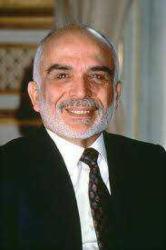
Huseyn I
 Jordan
- Biographical Information on King Hussein I
- Health Concerns and Medical Treatment
- Diagnosis and Concerns
- Legacy and Fervent Support
Biographical Information on King Hussein I
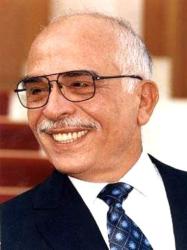
King Hussein I of Jordan was born on November 14, 1935, in Amman, Jordan. He ascended to the throne on August 11, 1952, following the assassination of his grandfather, King Abdullah I.
During his reign, King Hussein played a crucial role in shaping Jordan's political landscape and establishing it as a stable nation in the Middle East. He was known for his commitment to peace and his efforts to resolve regional conflicts.
Health Concerns and Medical Treatment
In 1992, King Hussein underwent surgery to remove his left kidney due to the presence of cancerous cells. Following the operation, he underwent regular clinical examinations to monitor his health.
In November 1997, King Hussein underwent another operation, this time to remove a lymph node, and soon after, he underwent surgery for an enlarged prostate gland. These medical procedures were indicative of his ongoing battle with health issues.
Diagnosis and Concerns
In July 1998, King Hussein accepted an invitation from President Bill Clinton to undergo medical tests in the United States. The results of these tests raised concerns among doctors, as a decrease in platelets was detected in his blood. It was suspected that the 62-year-old monarch might be suffering from lymphoma.
In a letter to his brother, Prince Hassan bin Talal, King Hussein shared that the doctors would provide a final diagnosis after receiving additional laboratory analysis. Despite the doctors' cautious assessment, the evidence indicated that he had lymphoma.
The news of King Hussein's illness deeply worried the Jordanian people, as 70 percent of them had been born and raised during his reign. They held great affection and admiration for their monarch.
Legacy and Fervent Support
King Hussein I's rule lasted for almost five decades, making him one of the longest-reigning monarchs in the world. He was widely respected for his leadership, diplomacy, and dedication to his country.
Throughout his reign, King Hussein worked tirelessly to promote peace and stability in the region. He played a pivotal role in peace negotiations, particularly during the Israeli-Palestinian conflict, earning him international recognition and respect.
Despite his health challenges, King Hussein continued to carry out his duties as the leader of Jordan. His unwavering commitment to his country and his people garnered him widespread support and admiration.
King Hussein I passed away on February 7, 1999, in Amman, Jordan, at the age of 63. His death marked the end of an era in Jordan's history, leaving behind a legacy of leadership, compassion, and a relentless pursuit of peace.