Ilya Egudin
 Belarus
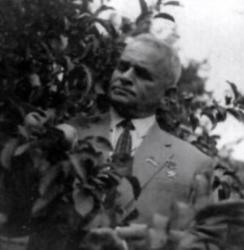
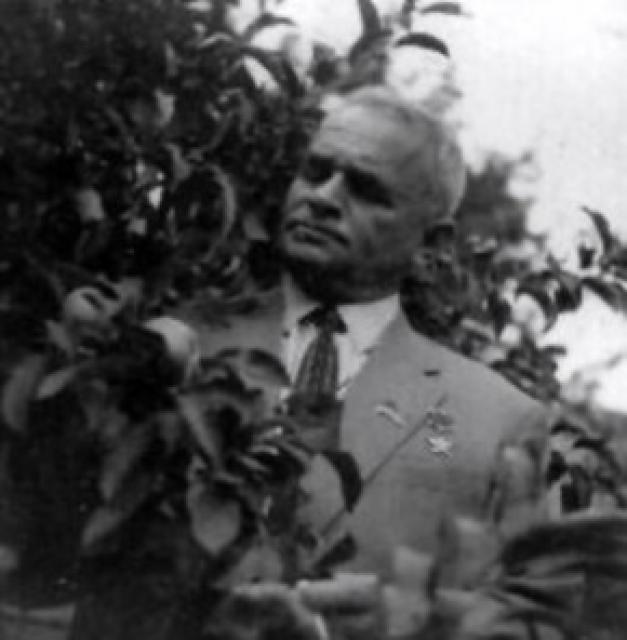
Ilya Egudin rose from working-class beginnings in Gomel to become one of the Soviet Union’s best-known collective farm chairmen. For decades he led the Druzhba Narodov farm in Crimea, which became a large, productive agricultural enterprise. The Soviet state recognized his work with the title Hero of Socialist Labor, while his public career also included service as a deputy in the Ukrainian SSR’s Supreme Soviet.
Early Life and Work
Egudin was born in Gomel on September 15, 1913, then part of the Russian Empire and now a city in Belarus. His father worked as a cabman, and the family had limited means. Egudin received an incomplete secondary education and began working as an apprentice locksmith in 1924, when he was still a boy.
His early adult life unfolded during the rapid transformation of Soviet agriculture. He moved into farm management in Crimea, where collective farms and machine tractor stations were being organized and expanded. In 1938, he became chairman of a collective farm named for the Second Five-Year Plan in the Telman district. The following year, his work was represented at the All-Union Agricultural Exhibition in Moscow. In 1940, he was appointed director of the Kurman machine tractor station, overseeing the maintenance and use of tractors and combines across local farms.
Building Druzhba Narodov
After the Second World War, Egudin returned to collective farm leadership. In 1949, he was sent to chair Druzhba Narodov, a struggling farm in the village of Petrovka. Over the years, it grew into one of the most prominent agricultural enterprises in Crimea. The farm combined crop cultivation and livestock production, and its goods were supplied beyond the peninsula to other Soviet republics and countries in Eastern Europe.
Egudin’s rise reflected both his managerial ability and the Soviet system’s emphasis on collective agricultural output. He became an influential local figure, responsible for coordinating a large workforce and a broad range of production. The farm’s public record was celebrated through state awards and agricultural exhibitions, while Egudin became a visible example of the Soviet ideal of advancement through labor and party service.
In 1966, Egudin received the title Hero of Socialist Labor, one of the Soviet Union’s highest honors for civilian achievement. The award recognized results in livestock development and increased production and procurement of meat, milk, eggs, wool, and other agricultural goods. He received the Order of Lenin and the gold Hammer and Sickle medal with the title. He was also awarded the Order of Lenin on several other occasions, along with the Order of the October Revolution, the Order of the Patriotic War, and medals from national agricultural exhibitions.
Public Service and Later Years
Egudin joined the Communist Party in 1938 and went on to hold positions in regional agricultural and party life. From 1959 to 1980, he served as a deputy in the Supreme Soviet of the Ukrainian SSR across five convocations. He also took part in the Union Council of Collective Farms and attended the 25th Congress of the Communist Party of the Soviet Union.
His identity as a Jewish farm leader in Crimea has also been examined by historians studying the history of Jewish participation in Soviet agriculture. Egudin’s career was unusual in its scale and visibility, and his public story was used to represent the possibilities of Soviet social mobility. His advancement, however, took place within a political and economic system that directed rural labor and production through state institutions.
Egudin lived in Petrovka, where he died on February 1, 1985. The collective farm he led for much of his adult life remained the defining work of his public legacy: a large agricultural enterprise whose achievements brought him national recognition and a place among the Soviet Union’s honored agricultural managers.