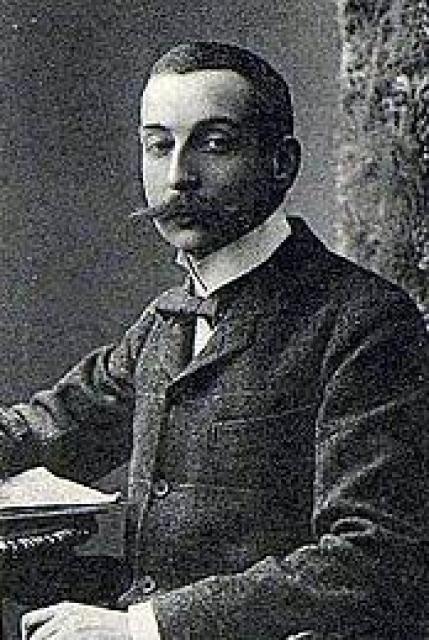
Ivan Kurakin
- Early Life and Education
- Early Career and Military Service
- Political Activities in the Early 20th Century
- Service During World War I
- Civil War and the Northern Region Government
- Emigration and Religious Life
- Monastic Life and Episcopal Ordination
- Death and Legacy
Early Life and Education
Born on August 1, 1874, Prince Ivan Anatolyevich Kurakin hailed from a noble lineage as a great-great-grandson of General Prosecutor Alexei Kurakin. His parents were Prince Anatoly Alexandrovich and Princess Elizabeth Mikhailovna (née Volkonskaya). Kurakin received his early education at the 3rd Saint Petersburg Gymnasium, graduating in 1893 with a gold medal. He subsequently pursued legal studies at the University of Saint Petersburg and passed the state examination at Kharkov University in 1897.
Early Career and Military Service
Kurakin's career began with the court title of chamberlain. He joined the military in 1897, serving in the Life Guards Cavalry Regiment. Rising through the ranks, he became a cornet in 1899 and later a lieutenant. In 1902, he was transferred to the reserve of the Guards cavalry.
Political Activities in the Early 20th Century
In 1901, Kurakin was elected Marshal of the Nobility of Mologa Uyezd. In 1906, he became the provincial Marshal of the Nobility of Yaroslavl. As a prominent member of the provincial assembly, he held various positions, including honorary trustee of the Yaroslavl Real School and honorary superintendent of the Mologa Trade School.
In 1907, Kurakin entered the State Duma as a member of the Octoberist Party. He chaired the Commission on Inquiries and served as Secretary of the Commission on Public Education.
Service During World War I
With the outbreak of World War I, Kurakin assisted in the evacuation of educational institutions ahead of the German occupation. During his time in the Duma, he participated in discussions on the transfer of church-parish schools from the jurisdiction of the Spiritual Ministry to that of the Ministry of Public Education.
In 1915, Kurakin became the Trustee of the Warsaw Educational District. He also received the rank of Actual State Councillor and was awarded various orders for his service.
Civil War and the Northern Region Government
During the Russian Civil War, Kurakin served as Minister of Finance in the Provisional Government of the Northern Region, led by Nikolai Chaikovsky. His efforts were acknowledged for heroically resisting the financial system imposed by the British.
Emigration and Religious Life
After the collapse of the Northern Region Government, Kurakin went into exile in France. In 1923, he wrote "Memoirs 1918-1922," although they were never published. Influenced by Metropolitan Evlogy Georgievsky, Kurakin underwent a spiritual transformation and embraced the priesthood.
On August 23, 1931, he was ordained a deacon and a priest in the Alexander Nevsky Cathedral in Paris. He later served as rector of the Saint Nicholas Church in Milan and from 1935, as rector of the Nativity of Christ Church in Florence.
Monastic Life and Episcopal Ordination
In 1949, Kurakin took monastic vows under the name John and was elevated to the rank of archimandrite. On October 9, 1950, he was ordained a bishop of Messina, vicar of the Western European Exarchate of Russian parishes under the Patriarchate of Constantinople.
Death and Legacy
Bishop Kurakin died suddenly of a heart attack on October 27, 1950, in Paris. His burial occurred at the Sainte-Geneviève-des-Bois Cemetery. His legacy as an influential political figure, dedicated public servant, and devout servant of the Church remains significant.


