Jean Baptiste Carnoy
 Belgium
- Early Life and Education
- Teaching and the Birth of a Cytology School
- Research and Major Publications
- A Journal and Lasting Institutions
- Final Years and Legacy
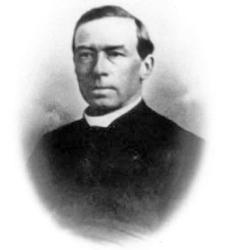
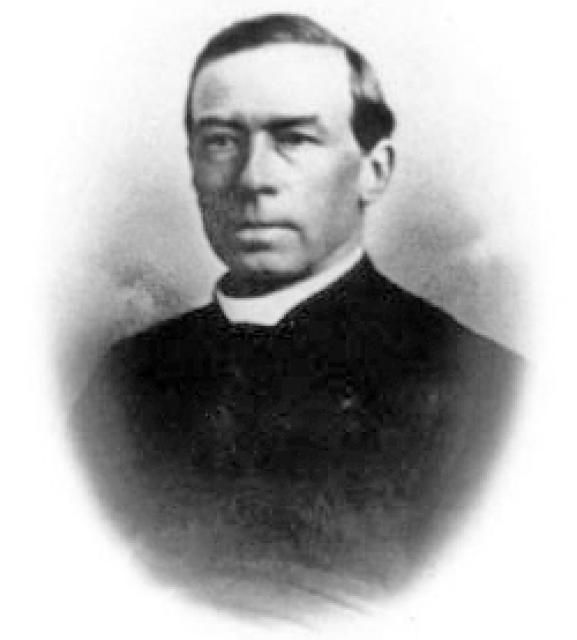
Jean-Baptiste Carnoy was a Belgian priest, botanist and biologist who helped make the cell a subject of systematic study. At the University of Louvain, he built an early school of cytology, taught microscopy and biology, and produced a textbook that became a landmark in the emerging field. His name is still attached to a widely used tissue fixative, a scientific journal and a university biology building.
Early Life and Education
Carnoy was born on January 11, 1836, in Rumillies, near Tournai, in what is now Belgium. He studied at the College of Tournai and entered the seminary, becoming a priest in 1861. His religious vocation did not displace his interest in science. He pursued natural history and botany at the University of Louvain, earning a doctorate in natural sciences in 1865.
A government travel fellowship gave him the chance to continue his training abroad. He worked with the botanist Johannes von Hanstein at Bonn and studied in other German and Austrian centers. In Jena, he met the instrument maker Carl Zeiss, an encounter that sharpened his attention to optical equipment and microscopy. He later traveled to Rome, where he worked with naturalists including Francesco Castracane and studied microscopic organisms.
Teaching and the Birth of a Cytology School
After returning to Belgium, Carnoy continued scientific work while serving as a vicar. In 1868, he was asked to join the University of Louvain and establish a course in general biology, but financial and institutional difficulties delayed the plan. He eventually became a leading teacher of microscopy, biology and botany at the university, bringing students into close contact with laboratory observation.
Carnoy believed that natural science depended on repeated direct examination and experiment. He helped introduce practical work into the teaching of natural sciences and developed one of the first dedicated courses in cytology, the study of cells. His laboratory became a center for research on cellular structure and division, and students trained there helped extend the work into other branches of biology and medicine.
Research and Major Publications
Carnoy’s research ranged across botany, microscopy and cell biology. Among the organisms he studied was the fungus “Mucor romanus,” which he used as a model for examining biological structures. In 1879 he published a manual of microscopy, presenting methods and observations for students and researchers.
His most influential book, “La Biologie cellulaire,” appeared in 1884 and offered a general account of cell biology at a time when the discipline was taking shape. He followed it with specialized studies of cell division and the changing state of the cell nucleus and protoplasm. His work helped establish cell study as a distinct and teachable field rather than a set of scattered microscopic observations.
Carnoy also developed a rapid chemical fixative for preserving tissues and cellular structures for microscopic examination. The mixture, based on alcohol, chloroform and acetic acid, became known as Carnoy’s fixative and remains associated with histological practice.
A Journal and Lasting Institutions
In 1884, Carnoy founded “La Cellule,” a journal devoted to cytology. It provided an outlet for his own research and that of his collaborators, helping build a scientific community around the new discipline. In 1890 he established a dedicated institute at Louvain, where the laboratory work that defined his career could continue on a larger scale.
His influence extended through teaching as well as publication. Carnoy’s students included researchers who went on to make important contributions to biology and medicine, while his insistence on hands-on observation helped modernize science education at Louvain. After the university split in 1968, a biology building at Louvain-la-Neuve was named in his honor.
Final Years and Legacy
Carnoy died on September 6, 1899, in Schuls, Switzerland. He was buried in Rumillies. By then, he had helped place Louvain on the map of cell biology through his teaching, laboratory, textbook and journal.
His legacy rests less on a single discovery than on the scientific infrastructure he created: a course, a research school, a specialist journal and practical methods that allowed others to study cells with greater precision. The lasting use of Carnoy’s fixative and the continued publication history of “La Cellule” preserve the name of a pioneering organizer of cytology.