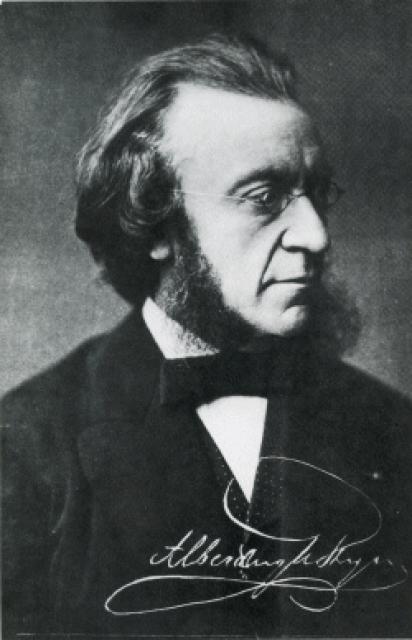
Joseph Albertus Alberdingk Thijm
 Netherlands
Early Life and Family
Jozef Alberdingk Thijm was born on August 10, 1820, in Amsterdam, the Netherlands. He was the eldest of four children born to Joannes Franciskus Alberdingk Thijm, a merchant, and his wife Catharina Thijm. Jozef's family was well-off, as his father was the founder of the successful butter trading company "F. Alberdingk & Zonen."
Career
Jozef's career spanned multiple fields. He became the head of a publishing firm and later held the Professorship of Aesthetics at the Amsterdam Academy of Art. His early aesthetic studies were published in the journal "Kunstkronijk." His literary prowess was showcased in his romantic novella "De klok van Delft" (1846) and subsequent works such as "Palet en Harp" (1849), "Geertruida van Oosten" (1853), and "Magdalena van Varaewijck" (1854).
Literary and Critical Contributions
As a poet, Alberdingk Thijm was influenced by Willem Bilderdijk. He was an ardent advocate for medieval art and literature. As editor of "Dietsche Warande" (1855) and "Volksalmanak voor Nederlandsche Katholieken" (1852), he aimed to disseminate knowledge about medieval culture. Alberdingk Thijm's extensive research focused on the works of Joost van den Vondel. He published the valuable book "Portretten van Josst van den Vondel" (1876) and later worked on a collection of Vondel's writings.
Personal Life
Jozef married Wilhemina Anna Sophia Kerst in Amsterdam in 1846. They had four children: a daughter and three sons. Their youngest son, Karel Johan Lodewijk, became better known as Lodewijk van Deyssel, a prominent writer and literary critic.
Legacy
Jozef Alberdingk Thijm passed away on March 17, 1889, in Amsterdam. He left behind a significant legacy as a writer, poet, publisher, and art critic. His contributions to the study of medieval culture and his advocacy for Dutch literature continue to be recognized and valued.


