Lars Lanat
 Sweden
- Childhood and Education
- Early Art and Provocations
- Nimis, Arx and the Nation of Ladonia
- The Muhammad Drawings and Public Controversy
- Later Years and Death
- Legacy
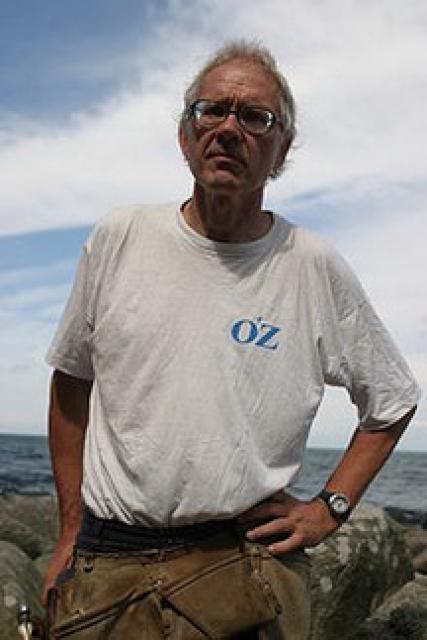
Lars Vilks was a Swedish conceptual artist and art historian whose career repeatedly turned the rules around him into part of the artwork. He became internationally known for a drawing of the Prophet Muhammad, but his most enduring project began decades earlier: Nimis, a sprawling driftwood construction on Sweden’s Kullaberg coast that grew into a decades-long dispute over art, land and authority.
Childhood and Education
Born in Helsingborg on 20 June 1946, Vilks grew up in nearby Höganäs. He studied art history and went on to earn a doctorate in the subject at Lund University in 1987. Before and alongside his art practice, he taught at art institutions in Oslo and Stockholm, and from 1997 to 2003 was professor of art theory at the Bergen National Academy of the Arts in Norway.
Early Art and Provocations
Vilks began exhibiting in the late 1960s, initially making paintings. By the mid-1970s, however, he was already challenging the boundaries of what could count as art. He used a painted Volkswagen as a mobile exhibition, offered himself as an artwork to a museum, and declared his hometown a work of art. These gestures were playful but pointed: they questioned the authority of galleries and juries and asked who gets to decide what art is.
Nimis, Arx and the Nation of Ladonia
In 1980, Vilks began building Nimis from driftwood on the Kullaberg nature reserve in north-west Skåne. The large wooden structure was erected without permission, and when local authorities ordered its removal, Vilks treated the resulting inspections, legal proceedings and public debate as part of the work itself. He added Arx, a construction made from concrete and stone that he also presented as a book.
The project expanded beyond its physical materials. In 1996 Vilks proclaimed the area around the sculptures the micronation of Ladonia, turning a local planning conflict into an ongoing conceptual artwork about borders, citizenship and bureaucracy. His 1999 sculpture Omphalos led to another dispute and was eventually removed by the authorities, while the Moderna Museet in Stockholm accepted it into its collection. The museum later described his Kullaberg work as art shaped not only by objects, but also by the press, legal system and official interventions.
The Muhammad Drawings and Public Controversy
In 2007 Vilks made a drawing that placed the Prophet Muhammad’s head on the body of a roundabout dog, referencing a Swedish street-art trend in which people installed homemade dog sculptures in traffic circles. A regional newspaper, Nerikes Allehanda, published it as part of an editorial defending freedom of expression. The drawing provoked intense protest and threats, and Vilks lived under police protection for years. He said the work was aimed at debates about art and freedom of expression; critics regarded the image as a deliberate insult to Muslims.
The controversy brought a new, dangerous dimension to his public life. In 2010, he was assaulted during a lecture at Uppsala University, and attacks and threats continued. In 2015 he was present at a free-speech event in Copenhagen when a gunman attacked the venue, killing a Danish filmmaker and later a synagogue guard. Vilks survived. The event made plain how debates over his art had become entangled with the threat of political violence, while also sharpening disagreement over how to balance artistic freedom with respect for religious communities.
Later Years and Death
Vilks continued lecturing, writing and making art while under police protection. He died on 3 October 2021, aged 75, when the police vehicle carrying him and two officers collided with a truck near Markaryd in southern Sweden. All three people in the car were killed. Investigators said they found no indication of criminal intent.
Legacy
Vilks remains a divisive figure whose work cannot be separated from the arguments it provoked. Nimis and Arx turned a remote coastline into a long-running conversation about art, law and public space, while Ladonia extended that questioning into the language of nationhood. His Muhammad drawing made him a global symbol in disputes over freedom of expression and religion, even as it exposed him to sustained threats. The contrast between the whimsical, improvised structures of Kullaberg and the grim security measures of his later life gives his career its lasting tension.