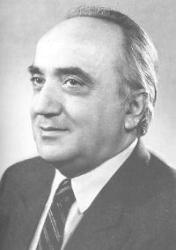
Lu Shaotsi
 China
China- Biography of Liu Shaoqi
- Early Life and Education
- Rise in the Communist Party
- Political Career and Conflicts
- Later Years and Downfall
Biography of Liu Shaoqi
Liu Shaoqi was a Marxist, proletarian revolutionary, politician, and theorist of China. He was a prominent leader of the Communist Party of China and served as the Chairman of the People's Republic of China from 1959 to 1968. Born on November 24, 1898, in Huaminlou village in Ningshan County, Hunan Province, Liu was the youngest child in a large family. His father was a school teacher, and Liu had three older sisters and two older brothers.
Early Life and Education
Liu received his primary education in his hometown and later enrolled in a teacher's training school in Changsha. In 1917, he joined a group of young people preparing to study in France, but his priorities shifted when he became involved in the revolutionary movement and participated in the May Fourth Movement. He developed a desire to go to Moscow instead of Paris. In 1920, Liu moved to Shanghai and became a member of the Socialist Youth League of China, the communist wing of the movement in China. It was in Shanghai that he first encountered the works of Marx and Engels and started studying the Russian language. In 1921, he spent a year in Moscow studying at the Communist University of the Toilers of the East.
Rise in the Communist Party
After joining the Communist Party of China in Moscow, Liu returned to his homeland and was sent to Shanghai to work with workers' organizations in the city. He later moved to the Anyuan coal basin as an assistant to Li Lisan. There, he successfully organized a massive miners' strike involving around 20,000 workers. Liu was then transferred to Guangdong Province to engage in political work within the Kuomintang-Communist coalition.
Liu's outstanding organizational abilities and dedication to his work impressed party and union leaders. He focused on developing and promoting leadership ideas while diligently carrying out everyday tasks. In 1925, Liu was elected as a deputy chairman of the All-China Federation of Trade Unions. He organized an anti-British movement in Shanghai and participated in the 16-month long strike in Xiang'an and Guangzhou from 1925 to 1926.
Political Career and Conflicts
When the Kuomintang began to implement a reactionary policy against the communists in 1927, Liu took on a leadership role in the underground workers' movement. He became the secretary of the Hubei Provincial Workers' Union and organized demonstrations in Hankou. In April of the same year, Liu was elected as a member of the Central Committee of the Communist Party of China and later became the chairman of the All-China Federation of Trade Unions. After the alliance between the Kuomintang and the Communist Party collapsed in 1927, Liu and other communists were forced to go underground.
In the following years, Liu held various positions within the party, including secretary of the Party Bureau of Workers and secretary of the Party Cell in Manchuria. In 1930, he traveled to Moscow to participate in the 5th Congress of the Red International of Trade Unions and served as a member of its Executive Bureau. Upon his return, Liu worked in Manchuria and then joined the Soviet Republic of China's headquarters in Jiangxi, where he focused on industrial activities. During his time in Jiangxi, Liu was elected as the chairman of the All-China Federation of Trade Unions. He later joined the Long March but was called back to North China to conduct underground work against the Japanese occupation.
Liu played a crucial role in organizing the communist guerrilla movement in northern and central China from this period until 1942. He established partisan bases behind Japanese lines, concealed communist activities under legal organizations, and emphasized the organization of broad masses. Liu became the central figure in the Communist Party of China after the publication of his book "How to Be a Good Communist" in 1939. He deepened his study of Marxism-Leninism and focused on self-education.
Later Years and Downfall
From 1932 to 1942, Liu led the organization of the guerrilla movement in Central China and the formation of the new Fourth Army. After the incident in January 1941, which shattered the alliance between the communists and the Kuomintang in the united anti-Japanese front, Liu was appointed as the political commissar of the Fourth Army. By the beginning of 1943, his position in the party strengthened further, and he became a member of the Central Committee's Secretariat.
At the party congress, Liu became the third figure in the party after Mao Zedong and Zhu De. In 1945, when Mao went to Chongqing, Liu was appointed as his deputy in Yan'an. After the evacuation of Yan'an in 1947 due to the resumption of the civil war, Liu could have potentially taken leadership in the event of Mao's capture or death. After the establishment of the People's Republic of China in 1949, Liu became the second vice chairman and secretary of the Central Committee of the Communist Party of China.
Throughout the 1950s, Liu publicly supported Mao's policies and emphasized collective leadership under Mao's guidance. He considered Mao's ideas crucial for the party and the revolutionary movement in Southeast Asia. In October 1952, Liu visited Moscow to participate in the 19th Congress of the Communist Party of the Soviet Union. In 1957, he represented Mao during his trip to the Soviet Union.
In 1959, Liu succeeded Mao as the Chairman of the People's Republic of China. However, political disagreements started to emerge between Mao and Liu. Mao advocated for rapid development based on the political consciousness of the Chinese people, while Liu supported gradual growth and relied on a group of economists he had gathered around him. Liu aimed to establish control over society through the authority of the party, while Mao wanted to dismantle the party's hierarchical structure and involve the masses in party governance. Liu's career decline is associated with the start of the Cultural Revolution in 1965. He was criticized severely and ultimately expelled from the party and removed from all party and government positions in October 1968.
Liu's fate afterward is not well-documented. It is believed that he was imprisoned and died (or was killed) in early 1969. Liu was officially rehabilitated in 1980. He had been married six times, with his last wife being Wang Guangmei, who died on October 13, 2006, at the age of 85.