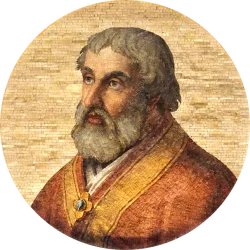
Lucius I
Lucius I was bishop of Rome from 253 until his death in 254. His brief leadership came amid persecution and a fierce dispute over whether Christians who had abandoned their faith under pressure could be readmitted to the church. Following the more forgiving policy of his predecessor, Cornelius, Lucius supported reconciliation after repentance. His exile under Emperor Gallus and quick return made him a symbol of endurance to the Roman Christian community.
A Roman Bishop in Exile
Little is known about Lucius’s early life. He was elected bishop of Rome in 253, after Cornelius died in exile. The persecution that had forced Cornelius from the city continued under Emperor Gallus, and Lucius was himself soon banished. His time away was short: after Gallus’s death and the accession of Valerian, Lucius was allowed to return to Rome.
The community’s welcome was remembered in a letter from Cyprian, bishop of Carthage, who congratulated Lucius on his return and praised his steadfastness. The correspondence gives a rare glimpse of the close ties between Christian leaders in Rome and North Africa during a period of danger and uncertainty.
Debate over the “Lapsed”
The church was also divided over the “lapsed,” Christians who had sacrificed to Roman gods or otherwise renounced their faith during earlier persecutions. Some church leaders argued that these believers should never again be admitted to communion. Others, including Cornelius and Cyprian, supported a path back after sincere repentance and penance.
Lucius maintained this more lenient policy. The dispute was linked to the schism of Novatian, whose followers opposed the restoration of those who had lapsed. For Lucius, the question concerned both discipline and the unity of the church: whether those who had failed under pressure could be reconciled, and who had the authority to decide.
Death and Memory
Lucius died in Rome on March 5, 254, after a short pontificate. Later church tradition honored him as a martyr, likely because of his period of exile rather than a death during the persecution. His name was preserved in the early calendar of Roman bishops, and his relics were later moved to churches in Rome.
Though few details of his life survive, Lucius’s leadership is visible in the correspondence of Cyprian and in the church’s continued debate over reconciliation. His exile, return, and support for the repentant helped carry forward the policy of his predecessor at a time when Christian communities faced both external pressure and internal division.