Mahmut Dzhelal Bayar
 Turkey
- Celal Bayar: Turkish Statesman and Third President
- Early Career and Involvement in Politics
- Role in the Turkish Independence Movement
- Republic Era and Premiership
- Formation of the Democratic Party
- Presidency and Downfall
- Trial, Imprisonment, and Rehabilitation
- Later Life and Legacy
Celal Bayar: Turkish Statesman and Third President
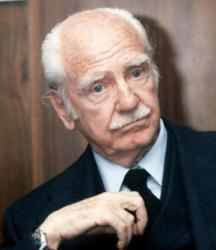
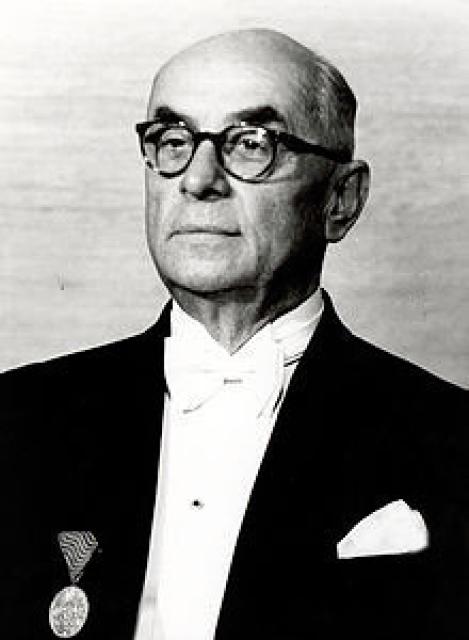
Celal Bayar, a prominent Turkish politician and statesman, served as the third President of Turkey from 1950 to 1960. Born in 1883 in Umurbey, near Gemlik, Bayar's father was a religious figure and teacher who had migrated from Lozengrad (now Kirklareli), Bulgaria.
Early Career and Involvement in Politics
After graduating from high school, Bayar worked as a clerk at the Gemlik court and later at Ziraat Bankası and the Bursa branch of Deutsche Orientbank. In 1908, he joined the Committee of Union and Progress (CUP), a political organization of Young Turks, and became an influential member. He served as general secretary of the recently established Izmir branch of the party, where he contributed to the establishment of girls' and railway schools.
Role in the Turkish Independence Movement
In 1919, Bayar was elected as a deputy to the Ottoman Parliament from Saruhan (present-day Manisa). Due to his disapproval of the Sultan's proposed constitutional amendment, he left for Ankara in 1920 to join Mustafa Kemal Ataturk and the Turkish Independence Movement. Bayar became an active member of the Society for the Defense of Anatolia and Rumelia (Müdâfaa-i Hukuk Cemiyeti) and was elected to the newly established Grand National Assembly of Turkey as a deputy from Bursa. In the same year, he began serving as Deputy Minister of Economy and was appointed Minister of Economy on February 27, 1921. He led the negotiation commission during the Çerkez Ethem rebellion.
Republic Era and Premiership
After the formation of the Republic of Turkey, Bayar was elected to the Parliament from Izmir in 1923. He established the İş Bankası (Türkiye İş Bankası) in Ankara in 1924 and served as its general manager until 1932. On October 25, 1937, following Ismet Inönü's resignation, Celal Bayar was appointed Prime Minister by Mustafa Kemal Ataturk. He held this position during Ataturk's death and after Inönü became President in 1938. Disagreements with Inönü led to Bayar's resignation on January 25, 1939.
Formation of the Democratic Party
Until 1945, Celal Bayar was a member of the Republican People's Party (CHP). On January 7, 1946, he, along with Adnan Menderes, Fuat Köprülü, and Refik Koraltan, founded the Democratic Party (DP), a socially conservative party with liberal economic views.
Presidency and Downfall
In Turkey's first free general elections on May 14, 1950, the Democratic Party won a majority of seats (408 out of 487). The Parliament elected Bayar, the chairman of the DP, as the President of Turkey. He was re-elected in 1954 and 1957, serving a total of 10 years as President, while Adnan Menderes held the position of Prime Minister. On May 27, 1960, a military coup led by Cemal Gürsel unfolded. Celal Bayar, Adnan Menderes, and several other government and party officials were brought to a military tribunal on the island of Yassıada on June 10 of that year.
Trial, Imprisonment, and Rehabilitation
Bayar and 15 other party members were charged with violating the constitution and were sentenced to death on September 15, 1961, by the High Court of Justice. The ruling military committee confirmed the death penalty for Menderes, Zoru, and Polatkan, while Bayar's sentence, along with 12 other party members, was commuted to life imprisonment. Bayar was sent to prison in Kayseri but was released due to health reasons on November 7, 1964. In 1966, Bayar was rehabilitated, and in 1974, he regained his full political rights. However, he declined an invitation to become a lifetime member of the Senate, stating that one could only represent the people through election.
Later Life and Legacy
Celal Bayar passed away on August 22, 1986, in Istanbul at the age of 103. He is survived by three children. In 1958, he was awarded an honorary doctorate by the Free University of Berlin. A university in Manisa, established in 1992, bears his name.