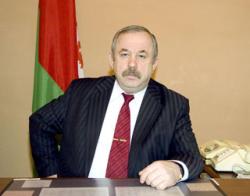
Mihail Phrunze
- Biography of Mikhail Frunze
- Prison and Revolutionary Activities
- Role in the Revolution and Civil War
- Later Career and Death
Biography of Mikhail Frunze
Mikhail Vasilyevich Frunze [January 21 (February 2), 1885, Pishpek, now Frunze, Kyrgyz SSR - October 31, 1925, Moscow] was a hero of the Civil War, a Soviet statesman and military leader, a People's Commissar for military and naval affairs, and a military theorist. He was born into a family of a paramedic. After graduating from the Pishpek City School, Frunze entered the gymnasium in Verny, from which he graduated with a gold medal. In 1904, he became a student of the Economics Department at the St. Petersburg Polytechnic Institute. Actively participating in student and worker circles, he joined the Bolshevik faction of the RSDLP and, after being arrested, was exiled from the capital, becoming one of the professional revolutionaries. He worked in Moscow, Ivanovo-Voznesensk, and became one of the organizers of the famous textile workers strike. In December 1905, he participated in the battles of Red Presnya in Moscow. In 1906, Frunze was a delegate to the Fourth Congress of the RSDLP in Stockholm, where he met V.I. Lenin. In 1907, he was elected a delegate to the Fifth Congress of the RSDLP, but he was arrested and sentenced to four years of hard labor.
Prison and Revolutionary Activities
Already imprisoned, Frunze was accused of armed resistance to the police and was sentenced to death twice, but the sentences were commuted to six years of hard labor under pressure from public opinion. In March 1914, he was sent to permanent exile in Eastern Siberia. In 1916, he escaped and, while in an illegal position, conducted revolutionary work among the soldiers of the Western Front.
Role in the Revolution and Civil War
By the beginning of the February Revolution in 1917, Frunze was the leader of a revolutionary organization based in Minsk, with branches in the armies of the Western Front. He played an active role in the preparation and implementation of the October Revolution of 1917, and after its victory, he headed the Ivanovo-Voznesensk district executive committee, the party committee, and the military commissariat. He was also a deputy of the Constituent Assembly from the Bolsheviks. From 1918, Frunze was one of the most active participants in the Civil War: in 1919, he commanded the Southern Group of the Eastern Front armies, which defeated A.V. Kolchak, and he was the commander of the troops of the Turkestan Front, as well as a member of the commission of the All-Russian Central Executive Committee and the Council of People's Commissars of the RSFSR for Turkestan affairs.
In 1920, he fought against the army of the Bukharan emir and led the defeat of P.Ya. Wrangel. When the Red Army took Crimea in the autumn of 1920, Frunze issued an order to spare those who surrendered, and telegraphed Wrangel an offer of complete amnesty for all who laid down their weapons and the opportunity for emigration for those who wished, for which he received a stern reprimand from V.I. Lenin, who was surprised by the "excessive compliance with conditions." Frunze did not participate in the senseless slaughter of White officers in Crimea, carried out by the punitive troika (G.L. Pyatakov, R.S. Zemlyachka, B. Kun), as he was sent to Ukraine to fight N.I. Makhno. He was appointed the commander of all Armed Forces of Ukraine and Crimea, authorized by the Revolutionary Military Council of the Republic.
Later Career and Death
For his skillful military leadership, Frunze was awarded the Honorary Revolutionary Weapon and two Orders of the Red Banner. In 1924, he was confirmed as the Deputy Chairman of the Revolutionary Military Council of the USSR and the People's Commissar for Military and Naval Affairs of the USSR, while also serving as the Chief of Staff of the Red Army and the Military Academy. Under Frunze's leadership, the military reform initiated by L.D. Trotsky in 1924-1925 was completed in the USSR. In 1925, Frunze was appointed Chairman of the Revolutionary Military Council of the USSR and the People's Commissar for Military and Naval Affairs.
Frunze died after surgery, becoming, according to the convincing results of the research by R.A. Medvedev and V.D. Topoliansky, one of the many victims of the emerging Stalinist dictatorship.