Nathalie Djurberg
 Sweden
- Childhood and Education
- Early Career and a Distinctive Technique
- Collaboration with Hans Berg
- International Recognition
- Artistic Legacy
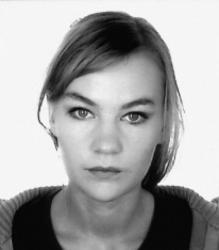
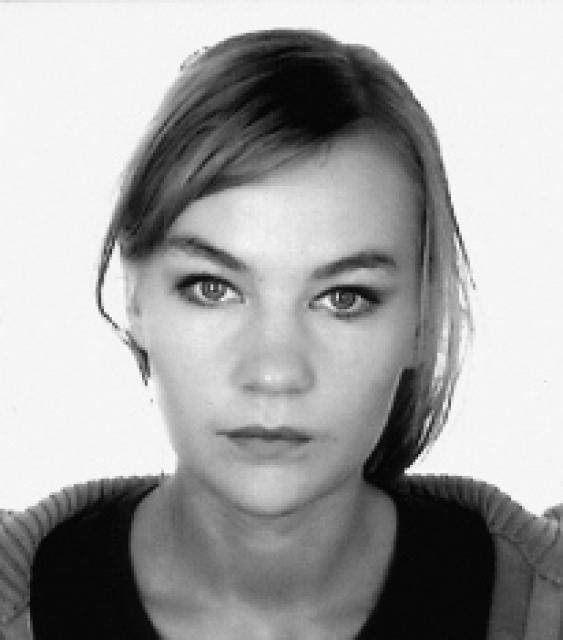
Nathalie Djurberg makes handmade worlds that can look playful at first glance and unsettling a moment later. Her clay figures, miniature sets, and stop-motion films move through stories of desire, fear, power, and transformation. Since 2004, she has worked closely with musician Hans Berg, whose soundtracks have become an essential part of the atmosphere in her films and installations.
Childhood and Education
Djurberg was born in 1978 in Lysekil, Sweden. She studied at Hovedskous Art School in Gothenburg before entering Malmö Art Academy, where she completed her MFA in 2002. Her training began in visual art, especially painting, but she increasingly turned to moving images and the possibilities of constructing scenes by hand.
Early Career and a Distinctive Technique
By the late 1990s, Djurberg had begun experimenting with Super 8 film and video. She developed a recognizable approach using clay and plasticine figures, fabric, synthetic hair, and carefully arranged miniature settings. In stop-motion, she photographed a scene frame by frame, shifting each figure slightly between images to create the illusion of movement.
The handmade quality is central to the effect. Her characters can appear vulnerable and funny, yet their stories often turn toward cruelty, obsession, eroticism, and violence. The contrast between childlike materials and adult themes gives the films a dreamlike, unsettling edge. Early works such as "Florentin" and "The Necessity of Loss" established a visual language in which innocence can quickly give way to menace and absurdity.
Collaboration with Hans Berg
Djurberg began collaborating with Swedish musician and producer Hans Berg in 2004. Berg composed music for her films, adding electronic rhythms and soundscapes that heighten the tension and strangeness of the handmade images. Their process grew into a close artistic partnership: animation, sculpture, and music work together to create immersive environments rather than isolated film screenings.
Among their best-known projects is "The Experiment," created for the 2009 Venice Biennale. The multimedia installation combined animated films with a surreal garden of oversized artificial plants made from materials including plastic, cardboard, and wire. The work expanded Djurberg’s practice beyond the screen, surrounding viewers with an environment that felt part fairy tale, part nightmare.
International Recognition
Djurberg received the Silver Lion for a promising young artist at the 2009 Venice Biennale for "The Experiment." The previous year, she received the Carnegie Art Award scholarship for a young artist. Her work has since appeared in major exhibitions and collections internationally, including presentations at Tate Modern, the Guggenheim Museum, the New Museum, and the Moderna Museet.
Their later projects continued to mix video, sculpture, sound, and installation. "The Parade" (2011), for example, brought together five animations and a large group of bird sculptures, while "A World of Glass" explored the atmosphere of glass objects and immersive environments. The duo has also continued to create new work for museums and galleries, with exhibitions in Seoul, Seattle, and elsewhere in 2024 and a major outdoor presentation, "The Circle of Life," at Ordrupgaard in Denmark in 2025.
Artistic Legacy
Djurberg’s films are deliberately difficult to reduce to a single moral or explanation. Their grotesque humor and reversals of power invite viewers to confront impulses that polite stories often conceal. Her transformation of humble materials into emotionally charged images has made her a distinctive voice in contemporary animation and installation art. Through her long collaboration with Berg, she has built an evolving body of work in which sound, sculpture, and moving images draw audiences into vivid, unpredictable worlds.