Renato Birolli
 Italy
- Early life and artistic beginnings
- Corrente and wartime engagement
- Rebuilding Italian art after the war
- Later work and recognition
- Legacy
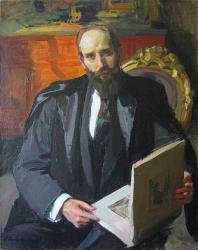
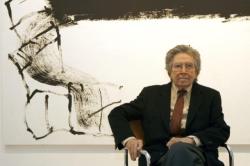
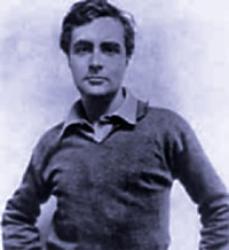
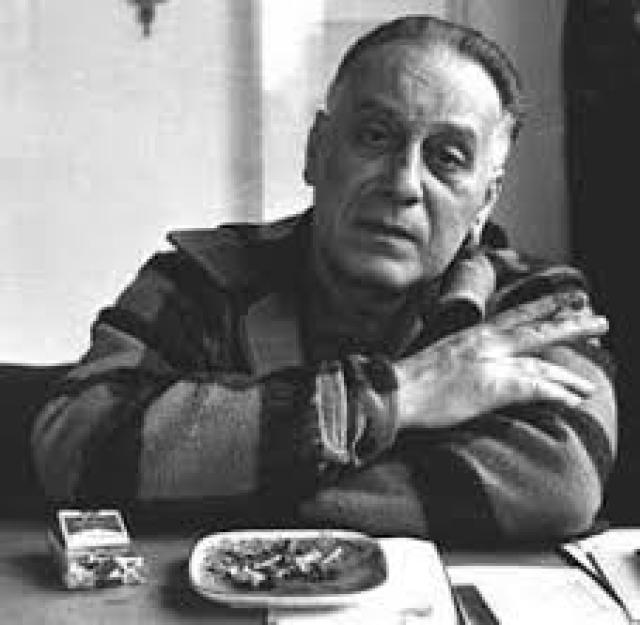
Renato Birolli (10 December 1905 – 3 May 1959) was an Italian painter, essayist and art critic whose work moved from expressionism toward an intensely personal form of abstraction. A central figure in the debates that reshaped Italian art from the 1930s through the postwar years, he helped bring together artists who sought new ties with European modernism. His paintings are remembered for their emotional force, vivid color and restless, searching brushwork.
Early life and artistic beginnings
Birolli was born in Verona to a working-class family. His father was a baker, and the family lived in a communal bakery when he was young. He first trained in accounting before turning to art, studying at Verona’s Cignaroli Academy of Fine Arts. In 1927 he moved to Milan, where he found a wider community of artists, writers and critics.
A decisive influence was the critic Edoardo Persico, whose interest in Impressionism and so-called primitive art challenged the dominant conventions of Italian painting. Birolli’s first exhibition took place at Milan’s Galleria del Milione in November 1930. His early work absorbed Impressionist and Expressionist approaches, with a strong interest in line, movement and the expressive weight of color.
Corrente and wartime engagement
In the 1930s, Birolli became part of a generation of artists pushing against the official artistic culture of Fascist Italy. He was among the figures associated with *Corrente*, a movement and journal established in 1938 that called for intellectual renewal and openness to contemporary European art. Birolli wrote for the publication as well as painting, treating the artist’s role as part of a broader cultural and civic debate.
The war deepened that commitment. During the German occupation, Birolli took part in the Resistance and produced drawings that bore witness to wartime violence. His series *Italia ’44* turned away from decorative heroics to record grief, fear and human suffering. The experience left a clear mark on his art, which increasingly joined formal experimentation with an urgent sense of history.
Rebuilding Italian art after the war
After the war, Birolli helped promote the Nuova Secessione Artistica Italiana, which became known as the Fronte Nuovo delle Arti. The group aimed to renew Italian art by opening it to international developments, including Cubism and the work of Picasso. Birolli traveled to Paris in 1947, encountering artists associated with the Nouvelle École de Paris and exploring the possibilities of post-Cubist composition.
His paintings from this period used fragmented forms and shifting viewpoints, while retaining a powerful, lyrical use of color. The Fronte brought together artists with different approaches, however, and tensions between realist and abstract positions eventually led to its dissolution. Birolli then helped form the Gruppo degli Otto in 1952, an association of eight painters supported by the critic Lionello Venturi. The group pursued an abstract art that remained engaged with nature and lived experience.
Later work and recognition
By the mid-1950s, Birolli’s painting had grown freer and more gestural. He explored the texture of materials and the movement of paint, in dialogue with the international currents often grouped under the term “Informal.” He encountered the latest American action painting during a 1958 trip to New York, studying the movement without simply adopting it.
His work received international attention. He took part in the first documenta exhibition in Kassel in 1955 and held solo shows in New York, including one at the Catherine Viviano Gallery. He also served as a commissioner at the 1958 Venice Biennale. His artistic evolution was never a clean break from one style to another: expressive color and a strong sense of rhythm remained at the heart of his work even as its forms became more abstract.
Legacy
Birolli died suddenly in Milan in 1959, at 53. His late paintings and wartime drawings continued to reach new audiences after his death, including through exhibitions devoted to *Italia ’44*. His career bridged the cultural opposition of *Corrente*, the postwar effort to reconnect Italian art with Europe, and the debates around abstraction in the 1950s.
For Birolli, color was more than a visual accent; it was a means of thinking and feeling. That conviction gave coherence to a career marked by change. From scenes of everyday life to fractured post-Cubist landscapes and freer abstract canvases, his art remained an act of poetic and political freedom.